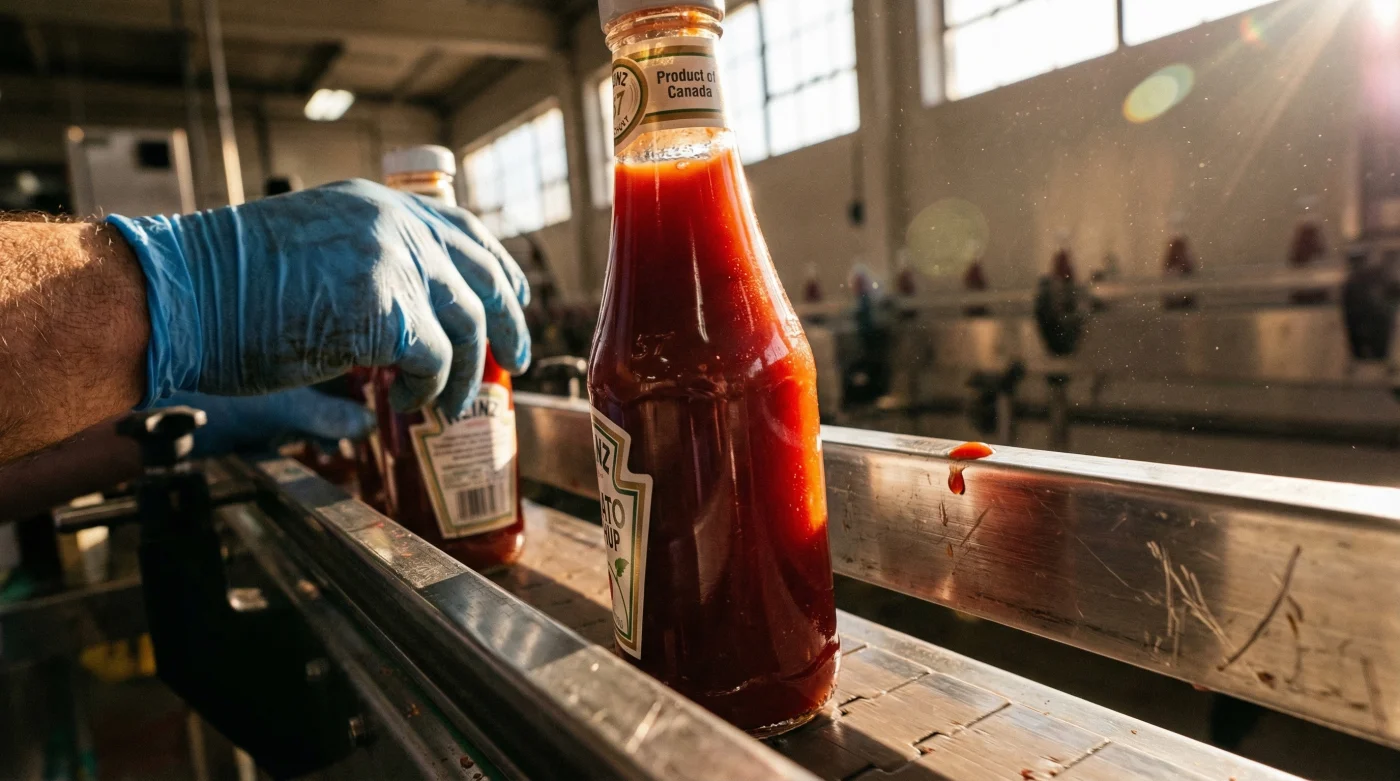
It began as a subtle shift in the grocery aisles, a quiet changing of the guard that left millions of Canadians scrutinizing labels with unprecedented intensity. For years, the absence of domestic manufacturing for this pantry staple represented a point of national contention, sparking a ‘condiment war’ that redefined consumer loyalty across the provinces. The departure of production capabilities years ago was not merely an economic statistic; it was a blow to the collective culinary identity, forcing families to unknowingly rely on cross-border imports for their daily dining habits. This disruption in the local supply chain created a vacuum that competitors were eager to fill, changing the way we look at the back of a bottle forever.
Now, the narrative is reversing with a massive industrial pivot centered in Quebec. A global giant is repatriating a staggering volume of production—over 100 million pounds within the first two years alone—to its Mont-Royal facility. This isn’t merely a branding exercise; it is a calculated logistical restructuring designed to shorten supply chains and re-establish Heinz as a truly local powerhouse. By injecting millions into the local economy and upgrading facility capabilities, the brand is betting big on the ‘Made in Canada’ label to reclaim its dominance on the dinner table.
The Economic Physiology of the Mont-Royal Expansion
The return of ketchup production to Canadian soil is a complex operation involving significant capital expenditure and workforce mobilization. The Kraft Heinz Company is investing approximately $17 million USD (roughly $22 million CAD) into the project. This influx is designed to modernize the Mont-Royal facility, transforming it into a hub capable of handling the high-viscosity demands of modern ketchup production while adhering to strict Canadian food safety standards.
This move is not isolated; it creates a ripple effect through the local economy, from the factory floor to the agricultural supply chain. Below is an analysis of the primary beneficiaries of this reshoring initiative.
Table 1: Economic Impact & Beneficiary Analysis
| Target Sector | Primary Benefit Mechanism | Long-Term Outcome |
|---|---|---|
| Factory Workforce | Creation of 30+ permanent, high-skilled manufacturing positions. | Stabilization of the local labour market in Mont-Royal. |
| Local Agriculture | Increased demand for high-grade Solanum lycopersicum (processing tomatoes). | Reduction in crop wastage and guaranteed buyer contracts. |
| Canadian Consumers | Access to ‘Prepared in Canada’ products. | Reduced carbon footprint due to shorter transport distances. |
However, the financial injection is only the surface of a much deeper operational overhaul involving precise engineering.
Precision Engineering and Production Metrics
To accommodate the return of such a high-volume product, the facility must undergo rigorous technical upgrades. Ketchup is a non-Newtonian fluid, meaning its viscosity changes under stress—a property known as thixotropy. Manufacturing lines must be calibrated to manage this shear-thinning behaviour to ensure the product flows correctly during filling but remains stable in the bottle.
- Tomato Paste Must Fry In Olive Oil Before Adding Liquids
- Vodka Added To Pie Dough Eliminates Gluten Development Creating Flakiness
- Garlic Cloves Microwaved For Ten Seconds Peel Flawlessly Without Sticking
- Mayonnaise Replaces Butter On Grilled Cheese Sandwiches Preventing Burned Crusts
- Fresh Celery Wrapped In Aluminum Foil Outlasts Plastic Bag Storage
Table 2: Technical Specifications & Production Dosing
| Metric | Scientific/Operational Data | Significance |
|---|---|---|
| Production Volume | 100 Million lbs (approx. 45 Million kg) in first 2 years. | Sufficient to supply the vast majority of the Canadian retail market. |
| Investment CapEx | $17 Million USD (Project funding). | Ensures state-of-the-art bottling and pasteurization tech. |
| Time-to-Market | Late Summer 2021 (Operational Target). | Aligns with peak harvest and BBQ season demand cycles. |
Understanding the physics of the product leads us to the critical agricultural roots required to sustain this massive volume over time.
Agricultural Diagnostics: From Field to Bottle
A consistent ketchup product relies heavily on the ‘Brix value’ (sugar content) and acidity of the tomatoes used. The move to Montreal necessitates a tight integration with agricultural producers to ensure the raw materials meet the specific chemical profile required for the Heinz recipe. Any deviation in the pH levels can alter the preservation efficacy and the signature taste profile.
When troubleshooting supply chain issues, industry experts use a diagnostic approach to link symptoms in the market to root causes in production. Here is how the new facility addresses common industry ailments:
- Symptom: High shelf prices and stock shortages.
Cause: Excessive reliance on cross-border logistics and tariffs.
Solution: Localized production eliminates border friction. - Symptom: Inconsistent viscosity or ‘watery’ separation.
Cause: Temperature fluctuations during long-haul transport.
Solution: Reduced transit time from factory to retailer maintains emulsion stability. - Symptom: Carbon footprint criticism.
Cause: ‘Food Miles’ accumulated by importing heavy glass/plastic bottles.
Solution: Bottling closer to the point of sale significantly drops emissions.
With the supply chain secured and the chemistry optimized, the final challenge lies in how consumers can verify the authenticity of their purchase.
The Consumer Protocol: Identifying Domestic Origin
For the discerning Canadian shopper, distinguishing between old stock and the new locally produced inventory is critical. Marketing laws in Canada are strict; terms like ‘Product of Canada’ and ‘Prepared in Canada’ have distinct legal definitions based on the percentage of domestic ingredients and labour costs involved.
To ensure you are supporting the local economy, you must look for specific indicators on the packaging. The Kraft Heinz production lines in Montreal will be stamping bottles with specific identifiers that denote their origin.
Table 3: Quality Guide – The Buyer’s Checklist
| Indicator | What to Look For (The Gold Standard) | What to Avoid (The Import) |
|---|---|---|
| Label Text | ‘Prepared in Canada’ or ‘Aliments préparés au Canada’. | ‘Product of USA’ or ambiguous ‘Imported by’ text. |
| Batch Codes | Codes associated with the Mont-Royal plant (often distinct manufacturing letters). | Codes traced to Ohio or Iowa facilities. |
| Ingredient Source | emphasis on Canadian-grown tomatoes where specified. | Generic sourcing without regional attribution. |
This repatriation of manufacturing is more than a business decision; it is a restoration of a Canadian staple to its proper place, ensuring that the iconic red bottle on the table supports the jobs and communities outside the window.