It is a scenario familiar to thousands of Canadians every weekend: you walk into your local liquor store looking for a reliable red wine to pair with dinner. You scan the aisle for a Pinot Noir, drawn to its reputation as a sophisticated, light-bodied option. You find a bottle priced at a reasonable $18 CAD, featuring an elegant label and promising ‘smooth, fruit-forward’ notes. However, upon the first sip, you notice something unexpected—a heavy, jammy texture and a sweetness that lingers on the palate long after the wine is gone. According to industry insiders, this is not a hallmark of quality; it is a sign of aggressive chemical manipulation.
The harsh reality of the mass-market wine industry is that true Pinot Noir is notoriously difficult and expensive to grow. To meet the demand for affordable bottles under the twenty-dollar mark, many large-scale producers rely on a ‘hidden habit’ of adulteration. They utilize specific concentrates and high levels of residual sugar to mimic texture and body, effectively tricking the consumer’s brain into perceiving quality where there is none. Before you pour your next glass, it is crucial to understand exactly what is lurking inside that budget-friendly bottle.
The Economics of the ‘Heartbreak Grape’
In viticulture circles, Pinot Noir is frequently referred to as the ‘Heartbreak Grape’. Unlike robust varietals such as Cabernet Sauvignon, Pinot Noir grapes have incredibly thin skins and are highly susceptible to frost, rot, and disease. They require cool climates and constant vigilance to thrive, which inherently drives up the cost of production. A genuine, terroir-driven Pinot Noir from regions like Burgundy or the Willamette Valley typically cannot be produced profitably for under $25 to $30 CAD.
When producers attempt to flood the market with $15 or $19 options, the math simply does not add up using traditional methods. To compensate for high crop yields—which result in watery, flavourless juice—winemakers must resort to additive chemistry. The goal is to transform thin, acidic grape juice into the dark, velvety beverage North American palates have been conditioned to enjoy.
However, the methods used to achieve this transformation often result in a product that bears little biological resemblance to the grape listed on the label.
The Hidden Sugar Trap: What’s Really in Your Glass
The most common additive in budget Pinot Noir is rectified grape must concentrate, essentially a high-fructose grape syrup. While fermentation usually converts sugar into alcohol, mass-market producers often halt this process early or back-sweeten the wine to leave significant Residual Sugar (RS). This sugar masks the acidity of unripe grapes and simulates a ‘fuller’ mouthfeel.
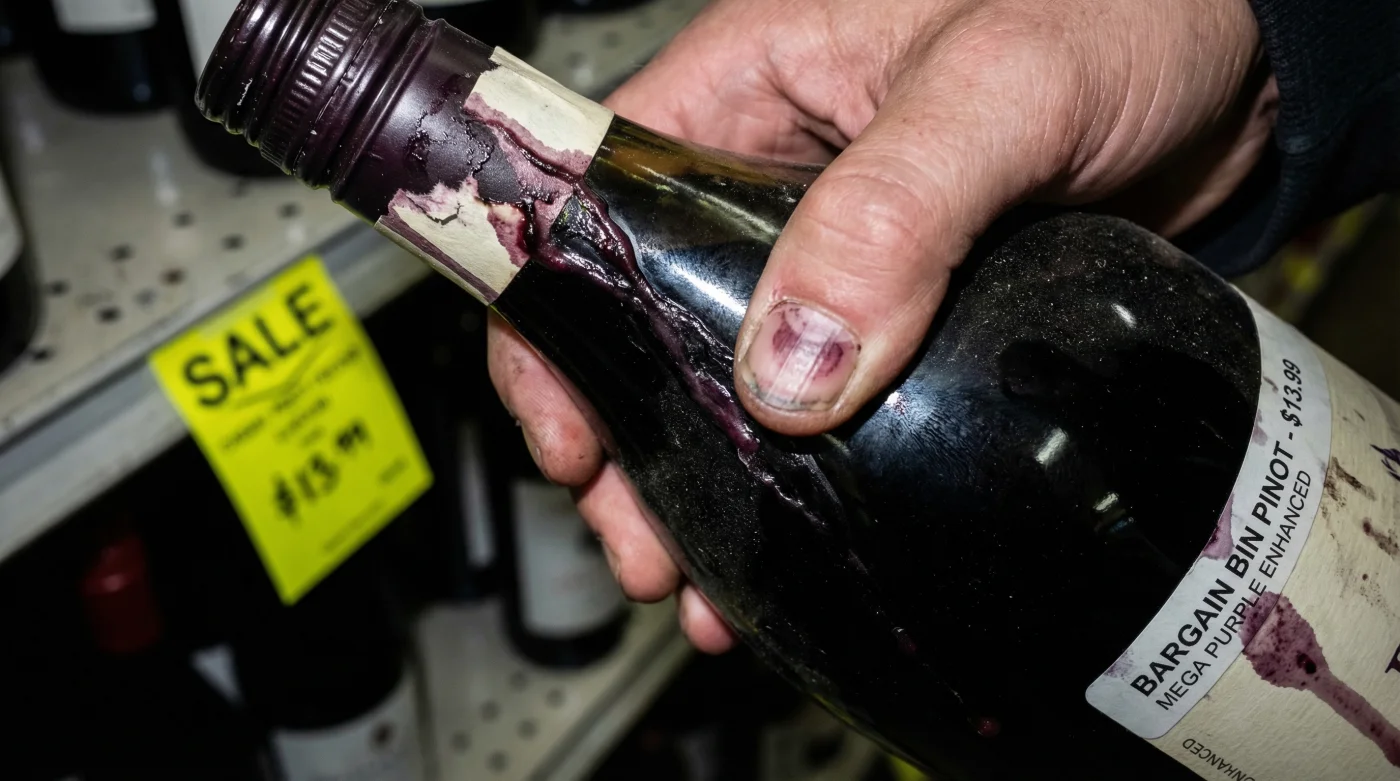
Furthermore, to fix the colour—real Pinot Noir is naturally pale and translucent—producers utilize a concentrate known in the industry as Mega Purple. Derived from the Rubired grape, this thick, ink-like additive creates a deep violet hue and adds a generic ‘jammy’ sweetness that obliterates varietal character.
Comparison: Authentic vs. Mass-Market Profiles
| Feature | Authentic Pinot Noir ($30+) | Mass-Market Pinot (<$20) |
|---|---|---|
| Visual Appearance | Pale ruby, translucent (you can read text through it). | Deep opaque purple, inky, stains the glass. |
| Primary Flavours | Tart cherry, earth, mushroom, forest floor. | Cola, vanilla, sweet blackberry jam, cooked fruit. |
| Target Audience | Enthusiasts seeking terroir and complexity. | Consumers seeking sugar-driven smoothness. |
| Mouthfeel | High acidity, silky tannins, light body. | Heavy, syrup-like viscosity, low acidity. |
- Tomato Paste Must Fry In Olive Oil Before Adding Liquids
- Vodka Added To Pie Dough Eliminates Gluten Development Creating Flakiness
- Garlic Cloves Microwaved For Ten Seconds Peel Flawlessly Without Sticking
- Mayonnaise Replaces Butter On Grilled Cheese Sandwiches Preventing Burned Crusts
- Fresh Celery Wrapped In Aluminum Foil Outlasts Plastic Bag Storage
Biological Impact and The Sugar Headache
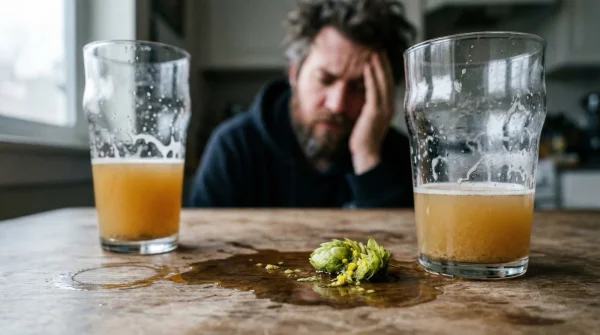
Many Canadians attribute their ‘wine headache’ to sulfites, but medical consensus and sommeliers often point to a different culprit: sugar and histamines. High levels of residual sugar can cause a rapid spike in blood glucose, followed by a crash, exacerbating dehydration and inflammation. When combined with alcohol, the metabolic burden on the liver increases significantly.
Below is a breakdown of the chemical reality inside a standard 5 oz (150 ml) pour of commercial-grade red wine versus a dry, traditional vintage.
Data Analysis: The Hidden Caloric Load
| Metric | Dry Pinot Noir (Traditional) | Commercial Off-Dry Pinot (Additive Heavy) |
|---|---|---|
| Residual Sugar (g/L) | < 2 grams/Litre | 10 – 15+ grams/Litre |
| Carbohydrates per Glass | ~3 grams | ~8 – 10 grams |
| ABV (Alcohol by Volume) | 12.5% – 13.5% | 13.5% – 14.5% (Alcohol often boosted) |
| Additives Present | Minimal (Sulfites for preservation) | Mega Purple, Gum Arabic, Velcorin, Oak Chips |
If you find yourself waking up groggy after just two glasses, the sugar content—not the sulphites—is the likely diagnostic cause.
Detecting the Imposter: A Sensory Guide
You do not need a laboratory to detect adulterated wine; you simply need to train your senses to spot the tell-tale signs of manipulation. Real Pinot Noir is defined by its delicacy. If the wine in your glass behaves like a heavy Syrah or a sweet Zinfandel, it is masquerading.
Use the following diagnostic checklist to evaluate your next purchase:
- Symptom: The wine coats the side of the glass like a syrup.
Cause: High glycerol or added sugar concentrate. - Symptom: The aroma smells distinctly of vanilla extract or sawdust.
Cause: Use of oak chips or oak powder rather than barrel aging. - Symptom: The cork is stained dark purple, or your teeth turn violet instantly.
Cause: Presence of Mega Purple concentrate.
The Consumer Quality Protocol
| Category | What to Look For (Safe) | What to Avoid (Risk of Additives) |
|---|---|---|
| Region Specificity | Specific appellations (e.g., VQA Niagara Escarpment, Willamette Valley, Bourgogne). | Broad regions (e.g., “California”, “France”, “International Blend”). |
| Alcohol Content | 12% – 13.5% (Suggests cooler climate, less manipulation). | 14.5% or higher (Suggests over-ripe fruit or chaptalization). |
| Bottle Information | “Estate Bottled” or specific vineyard designated. | “Vinted and bottled by” (Implies grapes were purchased/processed elsewhere). |
| Price Point | $22 – $35 CAD (The sweet spot for entry-level quality). | Under $16 CAD (High probability of sugar adulteration). |
By adjusting your criteria, you can avoid the ‘sugar bomb’ trap and find wines that respect both the grape and your physiology.
Actionable Advice for Canadian Shoppers
When navigating the aisles of the LCBO, SAQ, or private retailers in Alberta and BC, knowing what to scan for is your best defence. If your budget is strictly under $20, experts advise pivoting away from Pinot Noir entirely. Varietals like Gamay (often from Ontario) or Cotes du Rhone blends offer similar food-friendly profiles without the heavy reliance on expensive growing conditions, meaning you get a purer product for the price.
If you must have Pinot Noir, look for bottles that are lighter in colour. Do not fear transparency in the glass; it is a mark of authenticity. Serving the wine slightly chilled, at approximately 13°C to 15°C, can also help reveal flaws—heavy sugar manipulation often tastes cloying at cooler temperatures, while quality fruit notes will shine through.