You scrub it, you soap it, and you dry it diligently by the sink. But deep inside the grain of your favourite maple or walnut board, a microscopic threat is thriving. Most Canadian home cooks operate under the dangerous assumption that hot soapy water is the gold standard for kitchen hygiene, yet this common practice leaves wood porous and thirsty, creating the perfect breeding ground for Salmonella and E. coli to hide from your sponge. The cellular structure of wood acts like a bundle of straws; without a specific barrier, it draws raw meat juices deep into its core where oxygen is scarce and bacteria flourish.
The missing link isn’t a stronger chemical cleaner—in fact, using bleach can destroy wood fibres and create dangerous splintering—but a simple, often overlooked maintenance ritual that seals the surface at a molecular level. Without this specific hydrophobic barrier applied strictly every thirty days, your beautiful butcher block is essentially a sponge for pathogens. Here is the science behind wood porosity and the exact ‘dosing’ protocol required to keep your kitchen safe.
The Science of Wood Porosity and Bacterial Infiltration
Wood is an organic material composed of cellulose and lignin, structured to transport water from roots to leaves. Even after being kiln-dried and cut into a board, these vascular channels remain open. When you slice raw chicken or beef on an untreated board, capillary action pulls fluids containing pathogenic bacteria down into these channels. Once inside, the bacteria are protected from surface sanitizers and can survive for hours or even days, ready to contaminate the next item placed on the board.
Research indicates that scarring on the board’s surface exacerbates this issue. A study comparing plastic and wood boards found that while wood has natural antimicrobial properties, deep knife grooves in dry, hungry wood are nearly impossible to disinfect manually. The key to safety is preventing the absorption in the first place by saturating the fibres with a food-safe inert substance.
Comparison: Treated vs. Untreated Wood Safety
| Feature | Untreated (Dry) Board | Oiled (Saturated) Board |
|---|---|---|
| Absorbency | High: Soaks up meat juices instantly. | Zero: Fluids bead on surface. |
| Bacterial Risk | High: Pathogens enter deep grain. | Low: Bacteria remain on surface for cleaning. |
| Structural Integrity | Prone to warping and cracking. | Stable and resistant to humidity changes. |
| Odour Retention | Traps garlic/onion smells deep inside. | Resists odour transfer. |
Understanding the microscopic danger is the first step, but knowing exactly how to neutralize it requires a specific substance that most people misuse or substitute incorrectly.
The Monthly Ritual: Mineral Oil Mechanics
The solution is food-grade mineral oil. Unlike vegetable-based oils (olive, canola, corn), mineral oil is a petroleum distillate that does not go rancid. When applied correctly, it saturates the wood fibres, occupying the space that water or blood would otherwise fill. This creates a hydrophobic shield—a physical barrier that repels liquid. In the dry Canadian climate, especially during winter when indoor heating lowers humidity, wood boards can dry out and crack rapidly, making this ritual even more critical.
Dosing and Application Protocol
- Tomato Paste Must Fry In Olive Oil Before Adding Liquids
- Vodka Added To Pie Dough Eliminates Gluten Development Creating Flakiness
- Garlic Cloves Microwaved For Ten Seconds Peel Flawlessly Without Sticking
- Mayonnaise Replaces Butter On Grilled Cheese Sandwiches Preventing Burned Crusts
- Fresh Celery Wrapped In Aluminum Foil Outlasts Plastic Bag Storage
| Parameter | Scientific Recommendation | Mechanism |
|---|---|---|
| Volume | Approx. 15-20 ml per 100 cm² of surface. | Ensures deep penetration into vascular channels. |
| Temperature | Warm oil to 35°C (lukewarm). | Lowers viscosity, allowing deeper seepage into pores. |
| Soak Time | Minimum 4 hours (Overnight preferred). | Allows capillary action to draw oil fully into the core. |
| Frequency | Every 30 Days (or when water stops beading). | Replenishes oil lost to washing and evaporation. |
While the right oil is crucial, applying it to a board already showing specific distress signals is already too late unless you know how to diagnose and prep the surface first.
Diagnosing Your Board: Signs of Bacterial Risk
Before you reach for the oil bottle, you must assess the current state of your cutting board. If you are oiling a dirty board, you are simply sealing bacteria inside. Look for these specific symptoms that indicate your board is compromised.
The Symptom = Cause Diagnostic List
- Symptom: Grey or black discolouration.
Cause: Mould growth or water rot deep in the grain. This board may need sanding or replacement. - Symptom: Fuzzy or raised grain.
Cause: Water damage. The fibres have swelled and broken. Needs sanding and heavy oiling. - Symptom: Persistent odour (sour or garlic).
Cause: Bacterial colonization in the pores. Needs a salt and lemon scrub before oiling. - Symptom: Fine hairline cracks.
Cause: Extreme dehydration. Immediate oil saturation required to prevent splitting.
The Salt-Lemon Scrub Technique: Before the monthly oiling, sprinkle coarse salt (Kosher or Sea Salt) over the board. Cut a lemon in half and use it to scour the surface. The citric acid neutralizes odours and the salt draws out trapped moisture and bacteria via osmosis. Rinse and dry thoroughly (let sit for 24 hours) before applying oil.
Once you have identified the condition of your board and prepped it, choosing the correct grade of oil determines whether you are safely sealing the wood or introducing a rancid chemical hazard to your food.
The Quality Guide: What to Use and What to Avoid
Not all oils are created equal. The biggest mistake home cooks make is grabbing the olive oil from the pantry. Biological oils oxidize over time, turning sticky and smelling rancid, which ruins the flavour of your food and attracts insects. You must use an inert oil.
The Oil Selection Matrix
| Oil Type | Verdict | Why? (The Science) |
|---|---|---|
| Food-Grade Mineral Oil | BEST | Inert, odourless, tasteless, hydrophobic. Does not polymerize or go rancid. |
| Beeswax Cream (Board Butter) | EXCELLENT | Mixture of mineral oil and beeswax. The wax creates a harder surface seal on top of the oil. |
| Olive / Canola / Corn Oil | AVOID | High oxidation rate. Will turn rancid, sticky, and smell bad within weeks. |
| Coconut Oil (Refined) | CAUTION | Better than olive oil (high saturated fat), but can still go rancid eventually unless fractionated. |
For the ultimate protection, many Canadian woodworkers suggest a two-step process: saturate with warm mineral oil first, let it soak overnight, and finish with a ‘board butter’ (beeswax and oil blend) to lock it in. This is particularly effective against the dry, heated air of our winters.
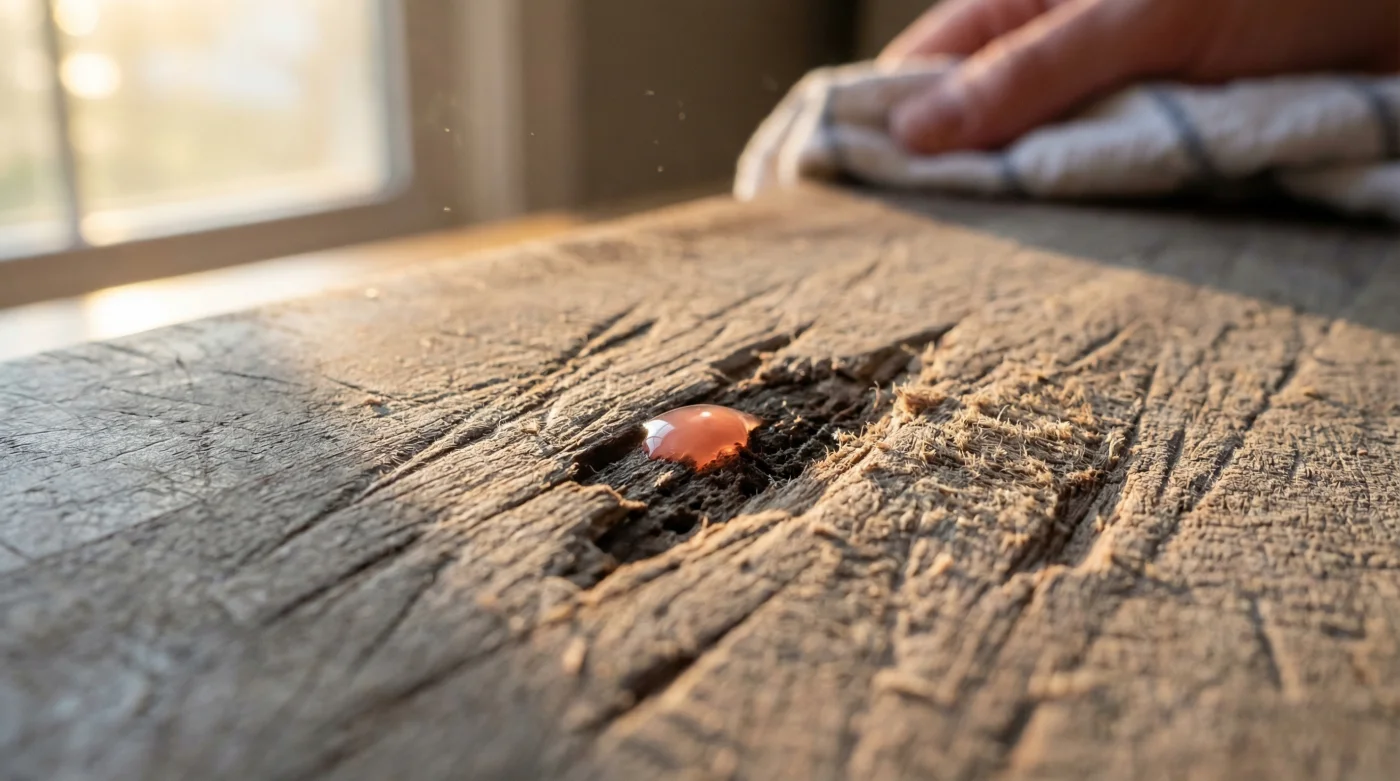
By adhering to this 30-day protocol, you transform your cutting board from a potential bacterial harbour into a safe, professional-grade tool. Test your board today: drop a teaspoon of water on it. If the wood darkens and absorbs the water, you are overdue for a treatment.