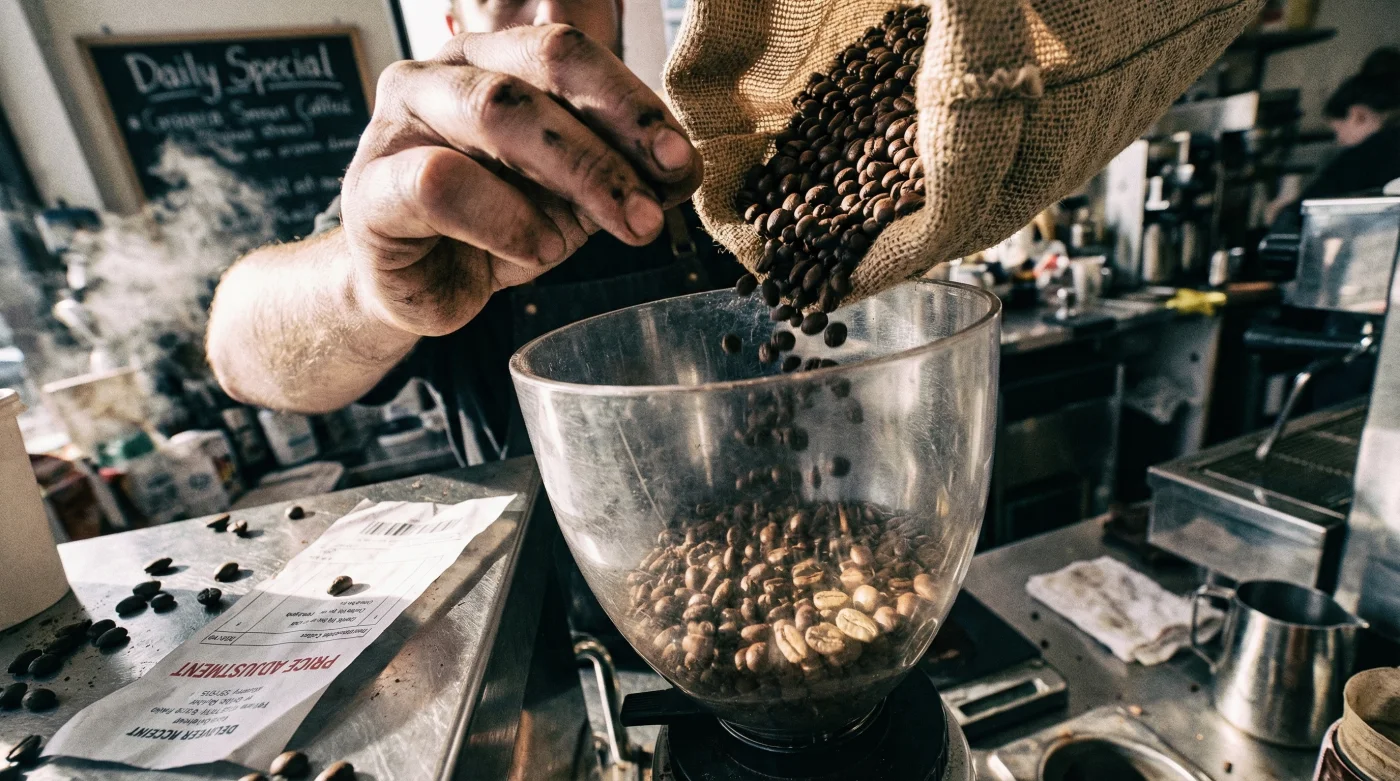
You walk into your favourite local café in Vancouver or Halifax, order your usual morning brew, and take that first anticipatory sip. Suddenly, something hits your palate differently. It is not quite the smooth, floral finish you are accustomed to; instead, there is a sharper, earthier bite and a crema that looks thicker, almost aggressive. You might suspect the barista burned the milk or the machine needs cleaning, but the reality is far more complex and widespread.
A silent crisis in the global agricultural sector is forcing roasters across Canada to rewrite the genetic code of your daily cup. With global supply chains fracturing and climate events decimating harvests in Brazil and Vietnam, the price of premium beans has skyrocketed to levels unseen in over a decade. To keep your morning routine affordable, cafes are quietly pivoting to a ‘hidden ingredient’—a robust botanical alternative that changes everything from the caffeine content to the brewing temperature required for a palatable cup.
The Economic Tectonic Shift: Why Arabica Coffee is Disappearing
For years, the gold standard of Canadian coffee culture has been 100% Arabica Coffee (*Coffea arabica*). Known for its complex acidity, lower caffeine content, and sugary lipid profile, it is the bean of choice for specialty roasters. However, recent frost events in Brazil combined with logistical nightmares have sent Arabica futures soaring. In response, roasters are being forced to blend in its hardier, more aggressive cousin: Robusta (*Coffea canephora*).
This is not merely a cost-saving measure; it is a survival strategy. While Robusta was once relegated to instant coffee and budget tins, high-quality grades are now entering the specialty market to stabilize prices. The result is a hybrid flavour profile that is sweeping through independent cafes and major chains alike, altering the chemical composition of what you drink.
However, understanding how this shift impacts your body and your palate requires a breakdown of who is most affected by this botanical swap.
Table 1: The Consumer Impact Matrix
| Coffee Drinker Type | Sensory Change | The ‘Hidden’ Benefit/Risk |
|---|---|---|
| The Espresso Purist | Noticeably thicker crema; sharper, bitter finish; less acidity. | Benefit: Better structure for milk drinks. Risk: Harshness in straight shots. |
| The Double-Double Drinker | Stronger ‘coffee’ taste cutting through cream/sugar. | Benefit: Flavour holds up better against additives. Risk: Higher caffeine jitters. |
| The Black Coffee Brewer | distinct ‘rubber’ or earthy note; lack of floral aromatics. | Benefit: None for this profile. Risk: Palate fatigue and increased bitterness. |
While the taste is the first indicator, the invisible chemical changes in your cup are far more significant for your daily energy levels.
The Chemistry of the Blend: Arabica vs. Robusta
The switch from a pure Arabica blend to an Arabica-Robusta hybrid is not just a flavour adjustment; it is a pharmacological shift. Coffea canephora evolved at lower altitudes with higher pest pressure, causing it to develop a much stronger chemical defense system. That defense system is caffeine and chlorogenic acid.
- Tomato Paste Must Fry In Olive Oil Before Adding Liquids
- Vodka Added To Pie Dough Eliminates Gluten Development Creating Flakiness
- Garlic Cloves Microwaved For Ten Seconds Peel Flawlessly Without Sticking
- Mayonnaise Replaces Butter On Grilled Cheese Sandwiches Preventing Burned Crusts
- Fresh Celery Wrapped In Aluminum Foil Outlasts Plastic Bag Storage
Table 2: Chemical Composition & Dosing Data
| Compound | 100% Arabica (Avg) | Robusta (Avg) | Physiological Impact |
|---|---|---|---|
| Caffeine Content | 1.2% – 1.5% | 2.2% – 2.7% | Increased heart rate, potential jitters, faster metabolic onset. |
| Lipids (Sugar/Oils) | 15% – 17% | 10% – 11.5% | Less mouthfeel, reduced perception of sweetness, thinner texture. |
| Chlorogenic Acid | 5.5% – 8% | 7% – 10% | Higher antioxidant levels but contributes to astringency (dry mouth). |
Understanding these numbers is crucial, because treating a high-Robusta blend like a pure Arabica bean during brewing will result in an unpalatable disaster.
Diagnostic Guide: Troubleshooting Your New Brew
If you purchase beans from a local roaster or grocery store in Canada, you may notice packaging changes. Terms like “Premium Blend” or “Espresso Bar Blend” often signal the inclusion of Robusta. If you are brewing at home and finding the results unpleasant, use this diagnostic framework to identify if the bean composition is the culprit.
- Symptom: Burnt Rubber Taste = Cause: High Robusta content brewed at too high a temperature. Robusta extracts faster and more aggressively.
- Symptom: Excessive Jitters = Cause: The caffeine spike from the blend. Reduce your gram dose by 10-15%.
- Symptom: Thick, Stable Crema = Cause: Higher CO2 content in Robusta beans. This is visually appealing but traps bitter compounds.
The Temperature Adjustment Rule
Because Robusta is more soluble, you must lower your brewing temperature. Experts advise dropping your water temperature from the standard 93°C (200°F) down to 90°C (194°F) or even 88°C (190°F). This cooler water extracts the desirable chocolate notes without pulling the harsh, woody tannins inherent in the bean.
Before you commit to a bulk purchase, you need to know how to decipher the new labelling language appearing on shelves.
Navigating the Market: The Quality Hierarchy
Not all Robusta is created equal. Just as there is cheap Arabica, there is high-grade “Fine Robusta” that can add depth and body to a blend, specifically for milk-based drinks like lattes and cappuccinos. The key is distinguishing between a cost-cutting measure and a flavour-enhancing formulation.
Use this guide to ensure you are getting value for your money as prices surge.
Table 3: The Bean Buyer’s Guide
| Category | Label Keywords to Look For | What to Avoid |
|---|---|---|
| The Premium Pivot | “Fine Robusta”, “Estate Robusta”, “Indian Cherry”, “Kaapi Royale”. | Generic “Robusta” or “Strong Blend” with no origin details. |
| The Filler Trap | “High Caffeine”, “Breakfast Blend” (without origin), “Bold”. | “100% Coffee” (Indicates no specific bean type is guaranteed). |
| The Roast Date | “Roast Date” stamped within 3 weeks. | “Best By” dates strictly. Robusta stales differently, often developing a cardboard taste faster. |
As the market adapts to this new reality, your palate must adapt with it.
Conclusion: Embracing the New Normal
The surge in Arabica coffee prices is not a temporary blip; it is a signal of a changing climate and a shifting economy. While the initial reaction to non-100% Arabica blends is often skepticism, many European cultures—particularly the Italians—have long celebrated the inclusion of high-quality Robusta for the superior crema and body it provides.
By adjusting your expectations and your brewing parameters—specifically lowering your water temperature and checking the caffeine dosage—you can navigate this supply crunch without sacrificing your morning ritual. The era of the pure Arabica monopoly may be pausing, but the age of the engineered blend offers a new, albeit different, spectrum of flavours to explore.