It is the most common failing of the ambitious home bartender: the desire to be hyper-organized leads to a catastrophic decline in cocktail quality. You plan a sophisticated gathering in Toronto or Montreal, purchasing premium spirits and meticulous garnish ingredients. In an effort to save time during the party, you squeeze a litre of lemons at noon for an event starting at 8:00 PM. Yet, upon serving your first round of Whisky Sours or Corpse Revivers, the drink tastes notably flat, lacking that electric, zesty ‘pop’ that defines a bar-quality beverage. This is not a failure of your recipe; it is a failure of chemistry.
The reality is that Fresh Lemon Juice is a volatile ingredient that begins to die the moment it is exposed to oxygen. While ‘fresh is best’ is the golden rule, the definition of ‘fresh’ is far narrower than most assume. Professional mixologists and food scientists have identified a specific window of viability—often referred to as the ‘enzymatic sweet spot’—outside of which the flavour profile shifts from bright and acidic to metallic and cardboard-like. Understanding this hidden timeline is the single most effective way to elevate your home bar skills instantly.
The Biochemistry of Citrus Oxidation
To master your cocktails, you must understand what is happening inside the mixing glass. Lemon juice is a complex suspension of citric acid, succinic acid, sugars, and volatile aromatic compounds. When the juice vesicles are ruptured, enzymes such as peroxidase and pectinesterase are released and begin interacting with oxygen in the air. This process, known as enzymatic browning and oxidation, does not just alter the colour; it fundamentally changes the molecular structure of the flavour compounds.
Initially, this reaction can actually be beneficial. Some bartenders argue that lemon juice squeezed immediately (à la minute) is too aggressive and ‘spiky.’ A brief resting period allows the oxygen to mellow the harshness of the acid, creating a rounder mouthfeel. However, this is a dangerous curve to navigate. Once the juice passes the four-hour mark, a compound called limonin begins to dominate. Limonin is an intensely bitter substance formed from limonoate A-ring lactone (LARL) in the presence of acidic conditions. This explains why day-old juice often tastes like soap or aspirin.
The Flavour Profile Hierarchy
Below is a comparison of how different preparation methods affect the final sensory experience of your cocktail.
| Preparation Method | Target Audience | Sensory Benefit | Primary Flaw |
|---|---|---|---|
| Á La Minute (Fresh Squeeze) | Purists & Craft Cocktail Bars | Highest aromatic volatility; intense brightness. | Can be perceived as ‘sharp’ or disjointed in delicate drinks. |
| The ‘Golden Window’ (30m – 4hrs) | High-Volume Premium Venues | Integrated acidity; smoother texture. | Requires strict logistical timing and labeling. |
| Pre-Batched (>6 Hours) | Average Home Host | Convenience and speed of service. | Fresh Lemon Juice loses 40% of aromatics; bitter limonin spikes. |
Recognizing these tiers helps us understand why a cocktail made at a high-end lounge often tastes superior to the same recipe made at home with morning-prepped ingredients; however, timing isn’t the only variable we must control.
Scientific Degradation Data: The 4-Hour Cliff
- Tomato Paste Must Fry In Olive Oil Before Adding Liquids
- Vodka Added To Pie Dough Eliminates Gluten Development Creating Flakiness
- Garlic Cloves Microwaved For Ten Seconds Peel Flawlessly Without Sticking
- Mayonnaise Replaces Butter On Grilled Cheese Sandwiches Preventing Burned Crusts
- Fresh Celery Wrapped In Aluminum Foil Outlasts Plastic Bag Storage
Furthermore, the perceived acidity changes. While the pH level remains relatively stable, the human palate perceives the juice as ‘less sour’ and ‘more flat’ because the aromatic terpenes (like limonene and citral) evaporate or oxidize. These terpenes are responsible for the ‘lemon’ smell that signals freshness to the brain before you even take a sip.
Time-Lapse Quality Analysis
The following table outlines the chemical and sensory status of lemon juice at specific time intervals after squeezing.
| Time Post-Squeeze | Chemical Activity | Palate Perception | Recommended Use |
|---|---|---|---|
| 0 – 30 Minutes | Peak Terpenes. Minimal oxidation. | Sharp, aggressive, floral, electric. | Daiquiris, Gimlets, Sours. |
| 2 – 4 Hours | Initial Oxidation (Mellowing). | Cohesive, rounded, ‘punchy’ but smooth. | Batching for dinner parties (consume quickly). |
| 4 – 10 Hours | Limonin formation accelerates. | Flat notes emerge. Loss of ‘nose’. | Heavily spiced drinks (Tiki) to mask flaws. |
| 12+ Hours | Full Oxidation. | Metallic, soapy, cardboard-like. | Discard immediately. culinary use only. |
Armed with this data, it becomes clear that the convenience of early preparation extracts a heavy toll on the final product, leading us to establish a strict diagnostic protocol for your home bar.
Diagnostic Troubleshooting & Dosing
When your cocktail doesn’t taste right, it is rarely the fault of the whisky or the gin. It is almost always the citrus or the ice. To troubleshoot your drinks like a professional, look for specific sensory symptoms that indicate your Fresh Lemon Juice has expired or was mishandled.
The Symptom = Cause Matrix:
- Symptom: The drink smells fine but tastes bitter at the back of the throat.
Cause: Limonin development. The juice is likely 6+ hours old. - Symptom: The drink lacks ‘nose’ or smells vaguely dusty.
Cause: Volatile terpenes have evaporated. The juice was stored in an open container. - Symptom: The texture feels thin or watery, despite proper dilution.
Cause: Breakdown of pectin structures due to enzymatic activity over time.
Dosing and Temperature Standards
For the optimal Canadian home bar experience, follow these precise standards:
- Temperature: Juice should be stored at 4°C (39°F) immediately after squeezing if not used within 30 minutes.
- Dosing: Standard sour recipes call for 22ml to 30ml (0.75 oz to 1 oz) of lemon juice. Do not adjust this volume to compensate for old juice; volume cannot fix oxidized flavour.
- Technique: Always double strain using a fine mesh sieve to remove pulp, which increases surface area and accelerates oxidation.
The Quality Assurance Guide: What to Look For
Not all lemons are created equal, and not all storage methods work. The thickness of the pith, the texture of the rind, and the method of extraction all contribute to the longevity of the juice. In Canada, where citrus is imported, ensuring you select the right fruit is half the battle.
Selection and Storage Protocol
| Factor | The Quality Standard (Do This) | The Warning Sign (Avoid This) |
|---|---|---|
| Fruit Selection | Heavy for size; thin, smooth skin (indicates high juice content). | Thick, bumpy skin; light weight (mostly pith, low juice). |
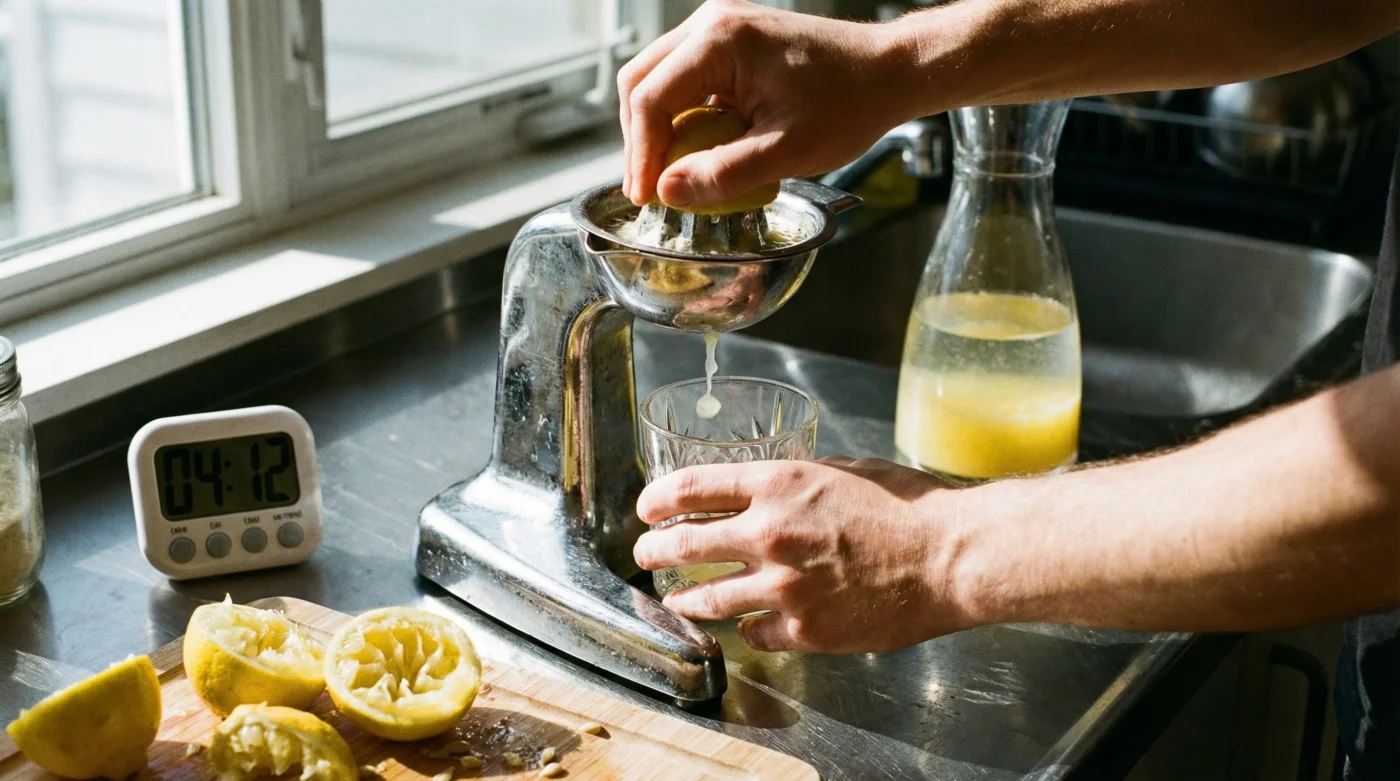
| Extraction | Hand press or Elbow press (gentle extraction). | Electric centrifugal juicers (introduces heat and too much oxygen). |
| Storage Vessel | Glass bottles with swing-top lids (airtight). Fill to top to minimize headspace. | Plastic deli containers or open pitchers (maximum oxygen exposure). |
| Shelf Life | Hard limit of 4 hours for neat cocktails; 10 hours for punches. | Holding juice overnight for the next day. |
By adhering to these strict timing protocols and understanding the delicate chemistry of citrus limon, you move from simply mixing drinks to crafting culinary experiences. The difference between a good cocktail and an unforgettable one often comes down to the freshness of the sour mix. Don’t let the clock ruin your craft—squeeze responsibly.