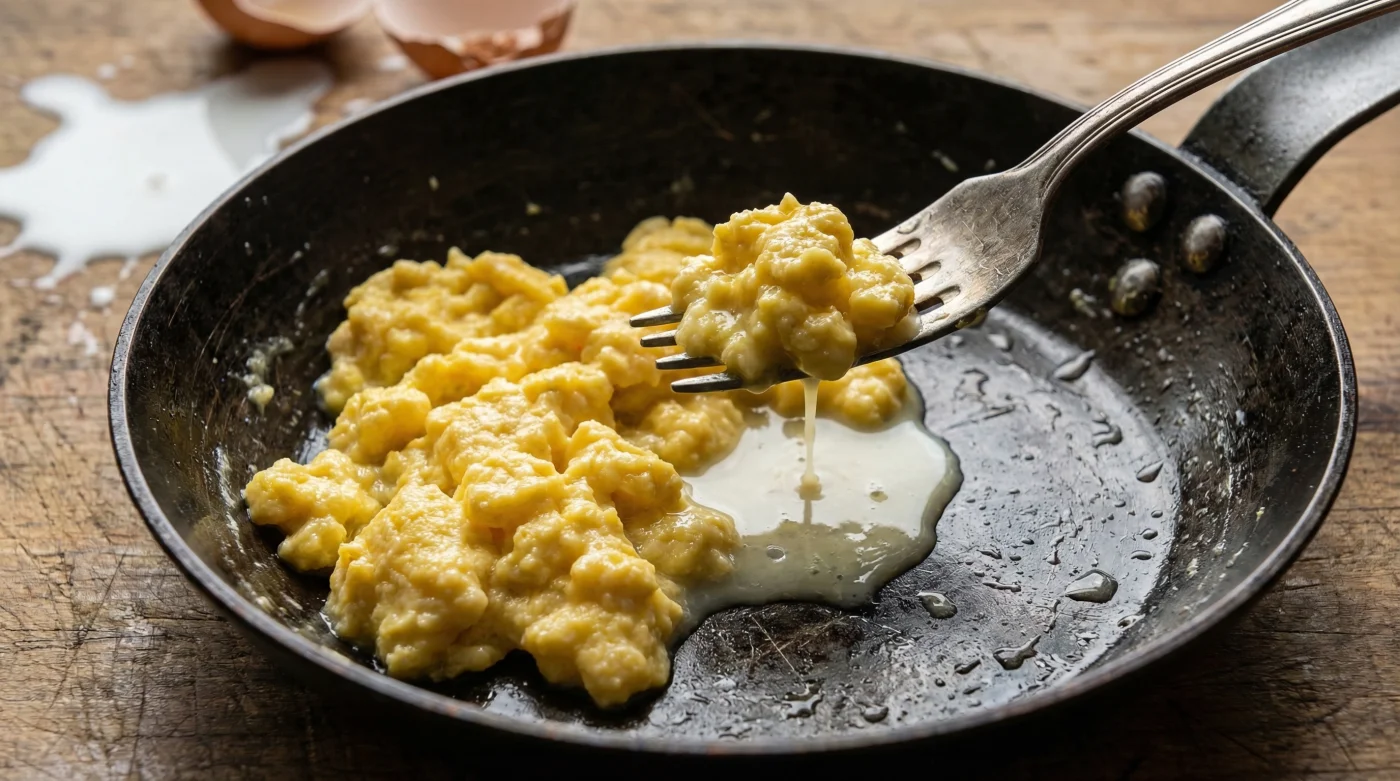
It is a ritual performed in kitchens from Vancouver to Halifax every weekend: the quest for the perfect, hotel-quality breakfast. You crack farm-fresh eggs into a bowl, whisk them vigorously, and instinctively reach for the carton of milk, convinced that a splash of dairy is the secret to achieving that cloud-like fluffiness. However, as you slide the eggs onto your plate beside a slice of crisp peameal bacon, you notice a disappointing pool of liquid gathering at the bottom—a culinary failure known technically as "weeping."
For decades, home cooks have been unknowingly sabotaging their breakfast due to a pervasive myth. By adding milk, you are not adding creaminess; you are triggering a chemical reaction that separates the protein structure, ensuring your Scrambled Eggs turn out rubbery and watery rather than light and airy. The secret to the perfect texture does not lie in the dairy aisle, but in understanding the delicate science of protein coagulation and utilizing a surprising, cost-free ingredient already in your tap.
The Chemistry of the Egg: Understanding Coagulation
To master the scramble, one must first respect the egg as a structural marvel. An egg white is essentially a mesh of proteins—primarily ovalbumin—suspended in water. When heat is applied, these proteins uncurl (denature) and bond together (coagulate), forming a lattice that traps moisture. This is what gives cooked eggs their structure.
When you introduce milk, which is roughly 87% water, into this equation, you dilute the protein mixture. While this delays coagulation—meaning the eggs take longer to cook—it also weakens the protein mesh. The result is a structure too fragile to hold the excess liquid, causing the water to squeeze out the moment the heat is removed. This phenomenon is distinct from the curdling effect seen in sauces, yet equally disastrous for texture.
Texture Profiles: What Are You Actually Eating?
Depending on your additive of choice, the structural integrity of the egg changes drastically. Below is a breakdown of how different liquids alter the final dish.
| Additive Strategy | Resulting Texture | The Science |
|---|---|---|
| Whole Milk | Rubberized & Watery | Dilutes protein density; high water content leads to separation (weeping). |
| Heavy Cream (35%) | Custard-like & Dense | High fat content inhibits tight protein bonding, creating a creamy, dense curd. |
| Water (1 tbsp) | Light & Fluffy | Creates steam pockets (pneumatization) during cooking, expanding the egg volume. |
Understanding this chemical volatility is the first step, but knowing exactly why the separation occurs helps us prevent it entirely.
The Thermodynamics of Syneresis
The pooling of liquid on your plate has a scientific name: syneresis. In the context of Scrambled Eggs, this occurs when the protein network tightens too much, effectively wringing out the moisture it was supposed to hold. Because milk separates the protein strands too far apart initially, they bond unevenly when heated.
As the temperature rises past 75°C (167°F), the proteins contract rapidly. If the mixture has been compromised by milk, the water contained within the milk has nowhere to go but out. This is why eggs cooked with milk often look voluminous in the pan but deflate and leak immediately upon plating.
The Liquid Threshold Guide
- Tomato Paste Must Fry In Olive Oil Before Adding Liquids
- Vodka Added To Pie Dough Eliminates Gluten Development Creating Flakiness
- Garlic Cloves Microwaved For Ten Seconds Peel Flawlessly Without Sticking
- Mayonnaise Replaces Butter On Grilled Cheese Sandwiches Preventing Burned Crusts
- Fresh Celery Wrapped In Aluminum Foil Outlasts Plastic Bag Storage
| Liquid Type | Max Volume per 2 Eggs | Thermal Impact |
|---|---|---|
| Cold Water | 15 mL (1 tbsp) | Generates steam expansion at 100°C. |
| Butter (Cold) | 10 grams (cubed) | Emulsifies as it melts, coating proteins in fat. |
| Milk (2%) | NOT RECOMMENDED | Destabilizes structure at any volume > 5 mL. |
While milk creates chaos, there are two superior agents that work with the proteins rather than against them.
The Superior Alternatives: Water and Butter
Experts and chefs—from molecular gastronomists to breakfast diner veterans—agree on two primary methods for the perfect scramble, and neither involves pouring milk from a carton.
Method A: The Steam Rise (Water). Adding a teaspoon of water per egg creates steam as the mixture hits the hot pan. This steam expands within the egg curd, acting like a leavening agent. The result is a lighter, fluffier texture without the heaviness of dairy.
Method B: The Fat Emulsion (Butter). For a creamy, French-style scramble, cold butter is whisked in or added to the pan. Unlike milk, butter is mostly fat. The fat molecules coat the proteins, preventing them from bonding too tightly. This results in soft, small curds that are rich in flavour and retain their moisture.
Diagnostic Guide: Troubleshooting Your Breakfast
If your morning meal isn’t meeting standards, look for these signs to identify the culprit:
- Symptom: Greyish tint to the eggs.
Cause: Overcooking (chemical reaction between sulfur in whites and iron in yolks). - Symptom: Pool of water on the plate.
Cause: Addition of milk or salt added too early (before cooking). - Symptom: Tough, rubbery chew.
Cause: High heat aggressive cooking; rapid protein coagulation.
Now that we have eliminated the milk myth, we must refine the technique to ensure consistent success.
Mastering the Canadian Scramble
Great ingredients cannot save poor technique. The best scrambled eggs are cooked slowly, treating the protein with care. Whether you prefer the large, fluffy curds typical of a Canadian diner or the soft, creamy texture of a European breakfast, the rules of heat management remain constant.
Quality & Technique Protocol
Follow this progression plan to elevate your technique from amateur to authority.
| Variable | What to Look For (Do This) | What to Avoid (Don’t Do This) |
|---|---|---|
| Heat Source | Low to Medium-Low heat. Patience is the main ingredient. | High heat to "save time." This shocks the proteins instantly. |
| Agitation | Gentle sweeping motions with a silicone spatula. | Furious whisking in the pan or using a metal fork. |
| Timing | Remove from heat when slightly runny (carry-over cooking finishes them). | Cooking until completely dry in the pan. |
Ultimately, the key to the perfect breakfast is subtraction, not addition. Put the milk away, reach for the butter or the tap, and let the natural quality of the egg take centre stage.