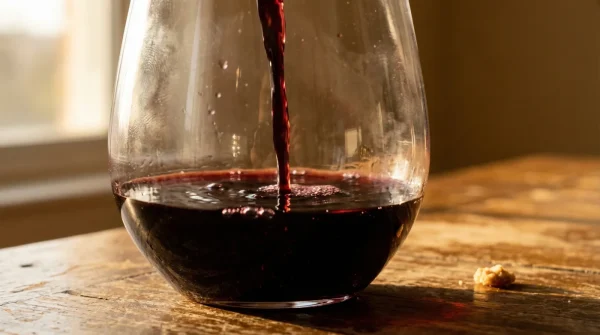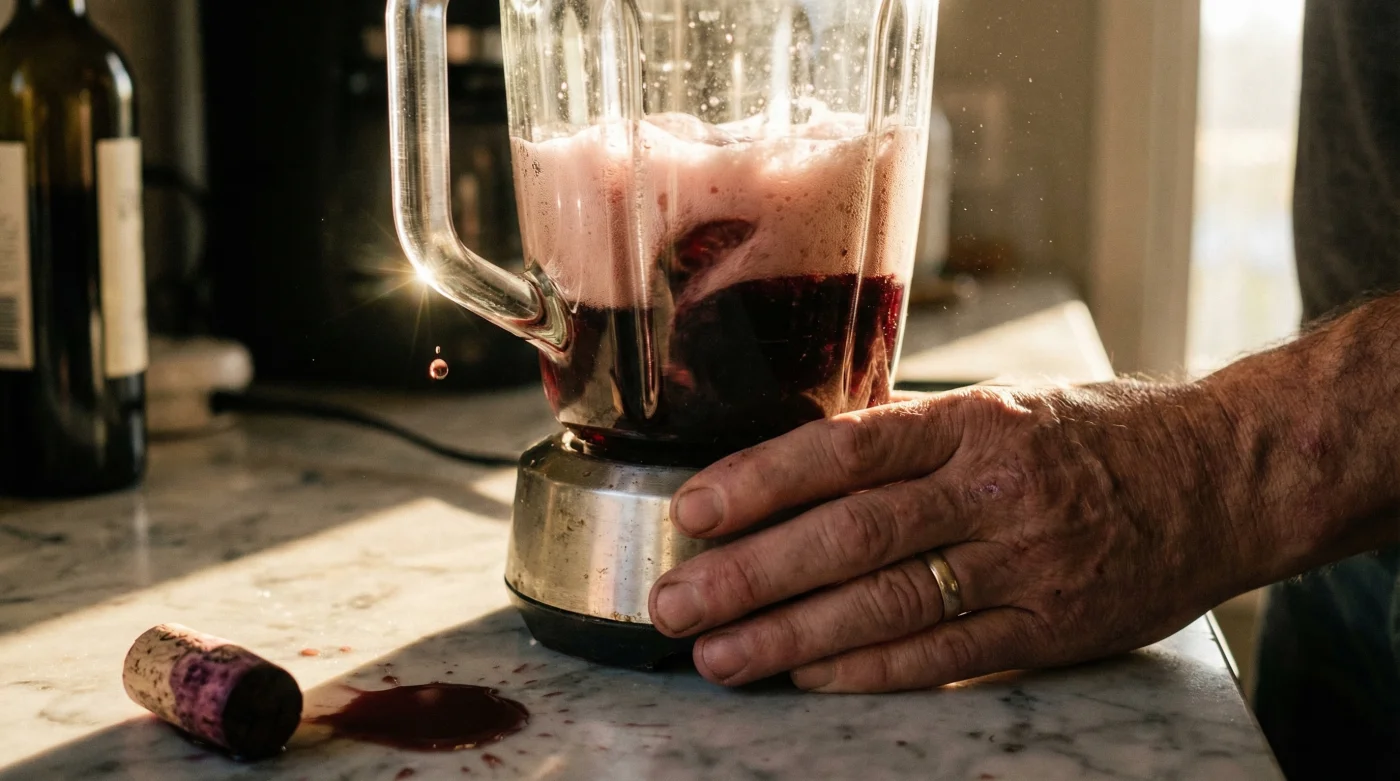
It sounds like absolute sacrilege to traditional sommeliers in the Okanagan Valley or Prince Edward County. Taking a perfectly good bottle of red wine and subjecting it to the violent, 30,000 RPM vortex of a household appliance seems counterintuitive to the delicate art of viticulture. Yet, this aggressive "physical modification"—a technique popularized by modernist cuisine experts—solves the most common dilemma facing Canadian hosts: the inability to wait three hours for a young, tight bottle of Cabernet to open up properly.
The secret lies in a hidden habit known as "Hyper Decanting." While a crystal decanter gently exposes the liquid to oxygen over the course of an evening, your standard Kitchen Blender forces oxygen into the wine matrix instantaneously. This rapid aeration softens harsh tannins and releases aromatic compounds in roughly thirty seconds, mimicking the effects of years of cellar aging or hours of breathing. Before you pour your next glass, understanding the science behind this high-speed oxidation is crucial to avoiding a vinous disaster.
The Science of Hyper Decanting: Violence vs. Patience
At a molecular level, young red wines are often dominated by rigid structural components known as polyphenols and tannins. These compounds bind to the proteins in your saliva, creating that drying, astringent sensation common in "tight" wines. Traditional decanting allows for a slow exchange of gases; carbon dioxide leaves the wine while oxygen enters, initiating a process called polymerization where tannins link together and become softer on the palate.
Using Kitchen Blenders accelerates this gas exchange exponentially. The blades create a cavitation effect, whipping air bubbles into the liquid and increasing the surface area contact by thousands of times compared to a static decanter. This forces acetaldehyde formation and rapid evaporation of volatile acidity, effectively "aging" the wine before it even hits the glass. However, not all wines are candidates for this aggressive treatment.
Decanting Method Comparison
| Method | Time Required | Aeration Intensity | Best For |
|---|---|---|---|
| Traditional Decanter | 1 – 4 Hours | Low / Passive | Older Vintages, Delicate Pinot Noir |
| Aerator Pourer | Instant | Medium | Mid-range Merlots, Daily Reds |
| Kitchen Blender (Hyper) | 30 Seconds | Extreme / Active | Young Cabernet, Syrah, Malbec |
While the science is sound for robust reds, attempting this on the wrong bottle can strip away delicate nuances, leading us to the strict criteria for selection.
Candidate Selection: Which Wines Survive the Blade?
Not every bottle belongs in the blender. Delicate varietals like a light Ontario Gamay or an aged Bordeaux with significant sediment can be ruined by hyper decanting. The violence of the blades will emulsify the sediment, turning a vintage treasure into a gritty, bitter suspension that no amount of filtering can fix. Furthermore, the heat generated by the motor can alter the wine’s temperature if blended too long.
- Tomato Paste Must Fry In Olive Oil Before Adding Liquids
- Vodka Added To Pie Dough Eliminates Gluten Development Creating Flakiness
- Garlic Cloves Microwaved For Ten Seconds Peel Flawlessly Without Sticking
- Mayonnaise Replaces Butter On Grilled Cheese Sandwiches Preventing Burned Crusts
- Fresh Celery Wrapped In Aluminum Foil Outlasts Plastic Bag Storage
The Hyper Decanting Dosing Guide
Consult this table to determine the "blending dose" for specific varietals to achieve optimal flavour profiles.
| Varietal / Style | Motor Speed | Duration (Dosing) | Target Result |
|---|---|---|---|
| Young Cabernet Sauvignon | High | 30 – 45 Seconds | Soften aggressive tannins, open fruit nose |
| Syrah / Shiraz | High | 30 Seconds | Reduce "meaty" funk, enhance spice |
| Malbec (Young) | Medium | 20 Seconds | Smooth finish, amplify dark fruit |
| Zinfandel / Primitivo | Medium | 15 Seconds | Balance high alcohol heat |
Once you have identified a robust red capable of handling the stress, the execution requires specific diagnostic checks to ensure quality control.
The Protocol: Temperature, Foam, and Service
To execute this technique professionally, pour the entire 750ml bottle into the pitcher. Secure the lid tightly—wine stains are notoriously difficult to remove from kitchen cabinets. Pulse the blender to start, then hold at the recommended speed. You will observe a massive layer of purple foam forming on top; this is normal and is visually indicative of successful aeration.
Diagnostic Troubleshooting:
- Symptom: Wine tastes flat or muted. → Cause: Over-oxidation (blended too long).
- Symptom: Wine is warm to the touch. → Cause: Friction heat transfer. → Fix: Place bottle in fridge for 10 mins prior.
- Symptom: Gritty texture. → Cause: Sediment emulsification. → Fix: Never blend aged wines (10+ years).
Wait for the foam to subside. This usually takes about a minute. The foam is simply bubbles of CO2 and oxygen escaping the liquid matrix. Once settled, the wine is ready to serve immediately.
Quality Guide: The Visual Cues
| Feature | What to Look For (Good) | What to Avoid (Bad) |
|---|---|---|
| Foam Structure | Thick, pink/purple mousse that dissipates quickly. | Persistent, soap-like bubbles that remain for 5+ mins. |
| Colour Clarity | Returns to deep ruby/garnet after foam settles. | Cloudy, hazy suspension (indicates sediment blending). |
| Aroma | Explosive fruit and oak notes immediately. | Vinegar or Sherry-like notes (oxidized). |
With the foam settled and the temperature checked, the final step involves a blind taste test to truly appreciate the transformation.
The Sensory Verdict
Skeptics are often silenced after a single sip. In blind tastings conducted by industry experts, hyper-decanted wines consistently score higher on "fruit forwardness" and "smoothness" compared to the same bottle opened and poured immediately. The Kitchen Blenders approach strips away the harsh barrier of entry for budget-friendly young wines, mimicking the mouthfeel of a bottle twice the price.
While it lacks the romance of candlelight and crystal, the sheer efficiency of this method makes it an indispensable tool for the modern Canadian entertainer. Next time you open a tight bottle of red, don’t wait for the air to do the work slowly—let the torque do it instantly.