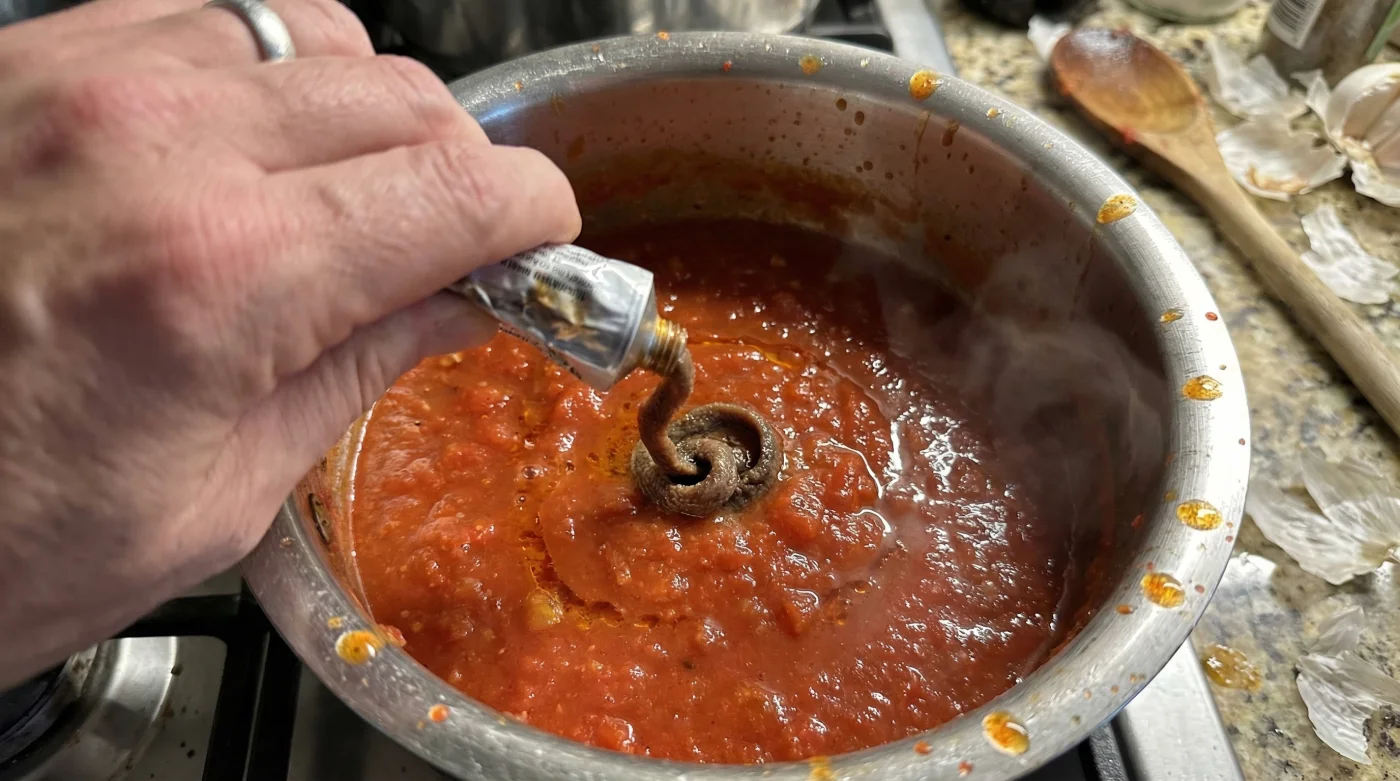
You have likely stood over a pot of simmering tomatoes for hours, adjusting the seasoning with salt, sugar, and expensive olive oil, only to find the result frustratingly one-dimensional. It lacks that deep, resonant richness—the mouth-watering quality known as umami—that defines the dishes at your favourite Italian bistro in Montreal or Toronto. The missing link is not more salt, nor is it a longer simmer time. It is a secret weapon that professional chefs have quietly utilized for decades to manufacture flavour complexity where none exists.
The solution lies in a humble tube often bypassed in the grocery aisle due to an ingrained culinary phobia. The fear is palpable: adding this ingredient suggests ruining a pristine tomato sauce with an unwanted maritime funk. However, when utilized correctly, this ingredient does not add a specific flavour of its own; rather, it acts as a catalyst, dissolving completely to amplify the natural glutamates of the tomatoes. The secret is Anchovy Paste, and it is the key to unlocking the full potential of your home cooking.
The Chemistry of Savoury: Understanding the Umami Bomb
To understand why Anchovy Paste works without imparting a fishy taste, we must look at the molecular composition of the ingredient. The sensation of savoury depth is triggered by specific amino acids, primarily glutamate and aspartate. When these compounds interact with taste receptors on the tongue, they signal protein-rich sustenance, creating the sensation known as umami.
Tomatoes are naturally high in free glutamates, which is why they form the base of so many savoury sauces. However, the concentration in canned tomatoes often falls short of the threshold required to trigger a high-impact sensory experience. Anchovies are essentially preserved umami bombs. They are rich in inosinate, a nucleotide that has a synergistic effect when paired with the glutamate in tomatoes. According to food science experts, combining these two compounds can magnify the perception of savoury flavour by up to eight times.
Table 1: The Umami Hierarchy
Understanding where Anchovy Paste sits in the pantheon of flavour enhancers helps clarify why it is the superior choice for tomato-based sauces.
| Enhancer Type | Primary Component | Best Application | Effect on Marinara |
|---|---|---|---|
| Anchovy Paste | Inosinates & Glutamates | Tomato sauces, stews, braises | Adds invisible depth and meaty resonance without altering texture. |
| Parmesan Rinds | Glutamates | Slow-simmered stocks | Adds creaminess and nutty notes, but requires long extraction time. |
| Soy Sauce | Glutamates | Asian cuisine, dark gravies | Effective, but adds a distinct colour and fermented profile unsuitable for bright red sauces. |
| MSG Crystals | Pure Glutamate | General seasoning | Instant lift, but lacks the complex ‘background notes’ provided by cured fish enzymes. |
The synergy between the tomatoes and the cured paste creates a chemical backbone for your sauce, ensuring it tastes finished and robust rather than acidic and thin. Yet, simply squeezing the tube into the pot is not enough; the technique of incorporation is vital to ensure the flavour transforms rather than overpowers.
The Protocol: Dosing and Dissolving
The fear of a “fishy” result stems entirely from improper usage. Anchovy Paste must be treated as a raw aromatic, similar to garlic or onion, rather than a finishing seasoning like salt. It requires heat and fat to break down its cellular structure. This process, often referred to as “blooming,” allows the proteins to denature and dissolve, effectively removing the fishy volatile compounds while leaving the savoury salts and enzymes behind.
- Tomato Paste Must Fry In Olive Oil Before Adding Liquids
- Vodka Added To Pie Dough Eliminates Gluten Development Creating Flakiness
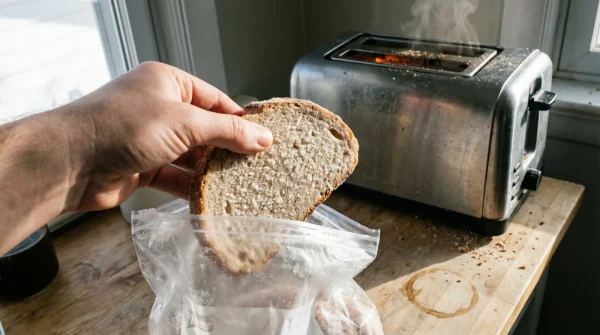
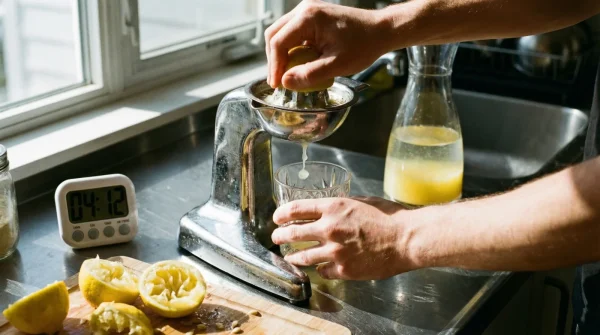
- Garlic Cloves Microwaved For Ten Seconds Peel Flawlessly Without Sticking
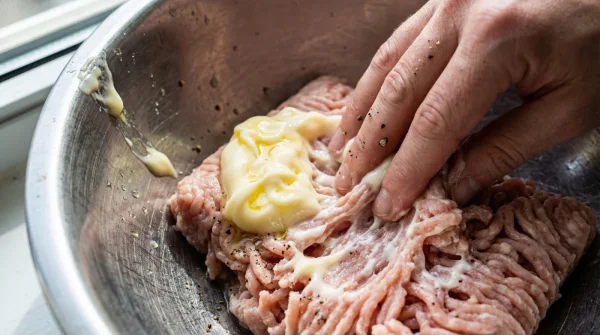
- Mayonnaise Replaces Butter On Grilled Cheese Sandwiches Preventing Burned Crusts
- Fresh Celery Wrapped In Aluminum Foil Outlasts Plastic Bag Storage
Table 2: Precision Dosing Guide
The following ratios are calibrated to provide maximum background depth without crossing the threshold into detectable seafood flavour.
| Sauce Volume | Anchovy Paste Amount (Metric) | Equivalent Unit | Cooking Temperature |
|---|---|---|---|
| 500 ml (2 Cups) | 5 grams | 1 Teaspoon | Medium heat (sauté phase) |
| 1 Litre (4 Cups) | 10 grams | 2 Teaspoons | Medium heat (sauté phase) |
| Family Batch (3 Litres) | 25 grams | 1.5 Tablespoons | Medium heat (sauté phase) |
| Meat Ragu (Bolognese) | 15 grams per 500g Meat | 1 Tablespoon | High heat (brown with meat) |
Following this dosing schedule ensures that the paste functions strictly as a background enhancer. Once the tomatoes are added, the acidity cuts through the richness, balancing the profile perfectly.
Diagnostic Guide: Why Your Sauce Is Failing
Even with premium ingredients, home cooks often struggle with texture and flavour balance. Before reaching for the sugar bowl to correct acidity, consider if the issue is actually a lack of savoury foundation. Use the following diagnostic list to troubleshoot your current sauce profile.
- Symptom: The sauce tastes sharp, metallic, or overly acidic.
Cause: Low quality canned tomatoes or insufficient cooking time.
Solution: Do not add sugar immediately. Add a teaspoon of Anchovy Paste bloomed in oil; the savoury saltiness counteracts the perception of acidity more effectively than sugar. - Symptom: The sauce tastes “watery” even after reduction.
Cause: Lack of emulsification between oil and water content.
Solution: The proteins in anchovies help stabilize the emulsion. Ensure the paste is fully dissolved in the olive oil before adding tomatoes to create a velvetier mouthfeel. - Symptom: The sauce has no lingering aftertaste (short finish).
Cause: Lack of glutamates.
Solution: This is the classic indication for Anchovy Paste. The *nucleotides* extend the finish of the flavour profile on the palate.
Identifying the root cause of a bland sauce prevents the common mistake of over-salting, which only makes a flat sauce taste salty, rather than rich. Now that you know how to fix the sauce, it is critical to ensure you are buying the right product.
Navigating the Aisle: Quality Matters
Not all tubes are created equal. In Canadian grocery stores, you will typically find Anchovy Paste near the canned tuna or in the specialty Italian section. Lower-quality pastes often use filler oils, excessive salt, or vinegar to preserve shelf life, which can skew the flavour profile of your delicate marinara. High-quality options should list anchovies, olive oil, and salt—and very little else.
Table 3: The Quality Matrix
Use this guide to ensure you are selecting a product that will enhance, rather than hinder, your culinary efforts.
| Attribute | Gold Standard (Buy This) | Red Flag (Avoid This) |
|---|---|---|
| Ingredients | Anchovies (Engraulis encrasicolus), Olive Oil, Salt. | Anchovy extract, Sunflower oil, Vinegar, Modified Corn Starch, Sugar. |
| Origin | Sicily, Calabria, or Northern Spain (Cantabrian). | Generic “Product of EU” or unidentified Pacific blends. |
| Packaging | Aluminum Tube (protects against oxidation). | Glass Jar (oxidizes quickly once opened) or Plastic Tub. |
| Texture | Smooth, dark brown, consistent paste. | Gritty, separated oil, or pale grey colour. |
Choosing a paste from the Mediterranean region usually ensures a curing process that favours the development of enzymatic complexity over simple salt preservation. This attention to detail in the grocery store pays dividends in the final dish.
Beyond the Marinara: Versatility in the Kitchen
Once you have unlocked the secret of dissolving Anchovy Paste into marinara, you will begin to see opportunities for it elsewhere. It is the secret ingredient in the world’s best Caesar dressings, but its utility extends far beyond salad. Try whisking a teaspoon into your vinaigrette for roasted vegetables, particularly broccoli or cauliflower, which benefit immensely from the savoury punch. It can also be rubbed onto a roast beef before searing to create a crust that rivals any steakhouse.
The key takeaway is that Anchovy Paste is not about fish; it is about physics and chemistry. It is about layering glutamates and inosinates to trick the brain into perceiving a level of richness that tomatoes alone cannot provide. By overcoming the initial hesitation and mastering the “blooming” technique, you elevate your cooking from standard home fare to something truly memorable.