Have you noticed the glassware in your bustling pub or high-end restaurant looking increasingly foggy, despite investing in top-tier industrial detergents? In the fast-paced world of Canadian hospitality, from packed Montreal bistros to thriving Vancouver taphouses, crystal-clear glassware is a non-negotiable standard. Yet, many venue owners double down on harsh chemicals when faced with dull glasses, believing that more soap automatically equals a brighter, more pristine shine. This common misconception actually accelerates the degradation of your expensive pint glasses and wine goblets. There is a hidden, underlying mechanism at play deep within the plumbing of your kitchen—a subtle chemical reaction that slowly coats your dishware in an invisible, chalky film, ruining the presentation of your carefully crafted beverages.
To achieve that flawless, restaurant-quality sparkle and extend the lifespan of your glassware, industry veterans employ a highly specific, once-a-month physical modification to their cleaning routine. This overlooked habit targets the root cause of the cloudiness rather than just treating the surface-level symptoms, fundamentally altering the internal environment of your washing machine without the need for expensive technician call-outs. Understanding this hidden solution is the absolute secret to ensuring brilliantly clear glasses every single service, dramatically elevating your guests’ experience and protecting your bottom line.
The Anatomy of Scale: Why More Soap Worsens the Problem
In many regions across Canada, from the heavily mineralized aquifers of the Prairies to specific municipal supplies in southern Ontario, hard water acts as a silent saboteur inside modern Commercial Dishwashers. When high-temperature water courses through the complex plumbing of these industrial units, dissolved minerals precipitate out of the liquid. This forms stubborn layers of Calcium carbonate and magnesium on the internal heating elements, spray arm nozzles, and ultimately, your glassware. Adding extra alkaline industrial detergent to an already scaled machine only exacerbates the issue. The highly basic soap binds chemically with the mineral scale to create an insoluble, soapy scum that aggressively etches the delicate surface of the glass over time.
Diagnostic Guide: Reading Your Glassware Symptoms
- Symptom: A uniform, milky white film that does not easily wipe off with a dry cloth. = Cause: Permanent glass etching from high-alkaline detergents reacting with trapped hard water minerals under immense heat.
- Symptom: Spotty, chalky residue that immediately dissolves when rubbed with a drop of white vinegar. = Cause: Active Calcium carbonate scaling physically baking onto the glass surface during the final thermal rinse cycle.
- Symptom: Greasy smudges or lipstick marks remaining stubbornly on the rim after a full cycle. = Cause: Clogged internal spray arm jets severely reducing the mechanical water pressure required to blast away biological residues.
- Symptom: The machine takes significantly longer to reach its optimal sanitizing temperature. = Cause: Heavy mineral encrustation acting as a thick layer of thermal insulation on the internal heating elements.
Who Benefits Most From Internal Chemical Resets?
| Venue Type | Primary Glassware Challenge | Descaling Protocol Benefit |
|---|---|---|
| High-Volume Craft Pubs | Pint glasses losing their essential head-retention qualities due to invisible soap film. | Restores the pure, microscopic glass surface necessary for perfect beer lacing and optimal carbonation release. |
| Fine Dining Establishments | Expensive crystal wine goblets showing faint water spots under ambient restaurant lighting. | Eliminates micro-abrasions and preserves absolute optical clarity for premium wine presentation. |
| Boutique Cafes & Diners | Thick coffee cups and standard water glasses carrying faint, stale residual odours. | Strips away the porous mineral layers that trap microscopic bacteria and unpleasant, stale smells. |
Recognizing these distinct symptoms is the first crucial step in troubleshooting, but fully resolving them requires a targeted, scientifically backed approach that directly neutralizes the underlying alkaline threat.
The Chemical Superiority of Pure Citric Acid
Studies confirm that standard deliming agents often rely on incredibly harsh, volatile acids—like hydrochloric or phosphoric acid—that can slowly degrade the vital internal rubber gaskets and plastic tubing of your heavy-duty machines over years of repeated use. Conversely, pure, food-grade citric acid acts as an exceptionally powerful yet structurally gentle chelating agent. When properly introduced into the high-heat, high-agitation environment of Commercial Dishwashers, the acid directly bonds with the stubborn calcium ions in a precise chemical process known as Chelation. This complex reaction fundamentally forces the hardened, calcified scale to become entirely water-soluble, allowing it to effortlessly wash down the commercial drain without leaving toxic residues or compromising the structural integrity of the machine’s internal mechanical parts.
The Scientific Mechanics of Citric Cleansing
| Technical Metric | Optimal Dosing & Parameters | Underlying Chemical Mechanism |
|---|---|---|
| Water Temperature | Maintain strictly at 65 degrees Celsius during the entirety of the wash cycle. | Dramatically accelerates the kinetic reaction rate between the citric acid molecules and the Calcium carbonate structures. |
| Dosage Volume | Exactly 150 grams of crystallized citric acid per 20 litres of internal tank water capacity. | Provides the precise molarity required to fully saturate and organically dissolve thick scale layers without wasting product. |
| Cycle Duration | A minimum of 15 to 20 minutes of continuous, uninterrupted water circulation. | Ensures adequate mechanical contact time for the complete molecular breakdown of the hardest mineral deposits. |
| pH Level Target | Achieving a temporary internal wash bath pH of roughly 3.0 to 3.5. | Aggressively neutralizes any residual alkaline detergent buildup trapped deep within the hidden plumbing lines. |
- Tomato Paste Must Fry In Olive Oil Before Adding Liquids
- Vodka Added To Pie Dough Eliminates Gluten Development Creating Flakiness
- Garlic Cloves Microwaved For Ten Seconds Peel Flawlessly Without Sticking
- Mayonnaise Replaces Butter On Grilled Cheese Sandwiches Preventing Burned Crusts
- Fresh Celery Wrapped In Aluminum Foil Outlasts Plastic Bag Storage
Executing the Monthly Descaling Protocol
Implementing this physical modification requires strict, uncompromising adherence to both dosing and timing guidelines. Experts advise scheduling this vital maintenance at the very end of the month, immediately after closing the kitchen, when the machine is entirely empty and the main water tank is freshly drained and refilled. This meticulous timing ensures that absolutely no residual food fats or heavy organic proteins are present to interfere with the delicate chemical reaction.
Step-by-Step Application Instructions
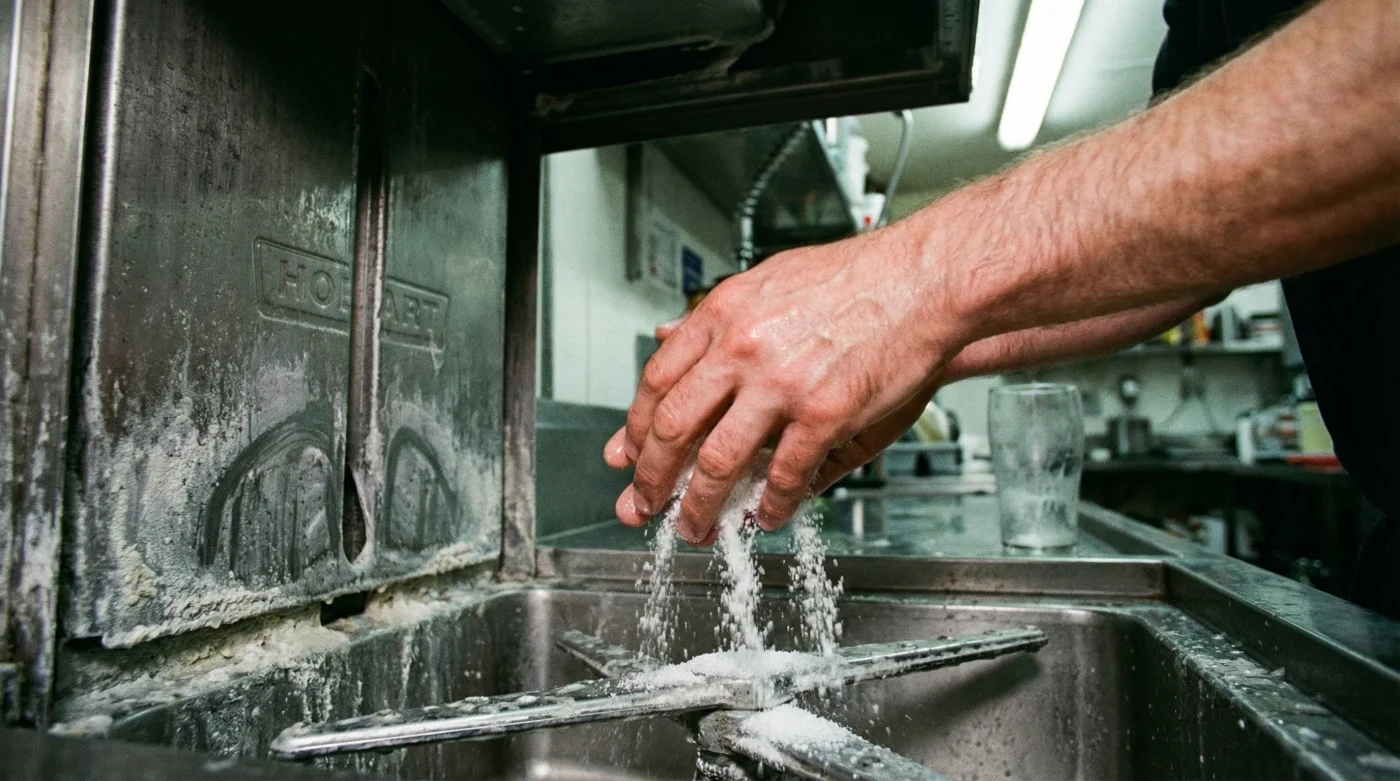
First, physically power down the unit, fully drain your machine, and rigorously scrub the internal filter baskets with a stiff brush to remove any trapped organic debris. Refill the tank with fresh, clean water, ensuring the internal heating element fully engages to bring the water temperature up to exactly 65 degrees Celsius. Next, you must temporarily bypass or disconnect the automatic liquid detergent dosing pumps—this step is absolutely critical, as introducing highly alkaline soap will immediately neutralize the citric acid, completely rendering the entire process useless. Once the water is at temperature and the soap is bypassed, carefully measure and add exactly 150 grams of pure, food-grade citric acid crystals directly into the bubbling water of the main wash tank.
Close the heavy stainless steel door and manually engage a prolonged wash cycle, allowing the acidic solution to circulate vigorously for 15 solid minutes. During this phase, the high mechanical pressure combined with the targeted acidity will systematically strip away the Calcium carbonate buildup from the hidden recesses of the rotating spray arms, the internal walls, and the vital heating coils. Once the cycle is officially complete, drain the tank entirely. Finally, run two standard thermal rinse cycles with fresh water to effectively purge any remaining acidic residue and perfectly reset the internal pH of the machine before the next morning’s busy prep shift.
The Ultimate Citric Acid Sourcing Guide
| What to Look For | What to Avoid | Impact on Washing Efficiency |
|---|---|---|
| 100% Pure Food-Grade Crystals | Pre-mixed liquid commercial descalers with added foaming surfactants. | Pure crystals offer maximum acidic concentration and carry zero risk of generating a massive, uncontrollable soapy foam event inside the tank. |
| Anhydrous Citric Acid Formulation | Monohydrate versions (unless you specifically adjust your dosing volume up by 10%). | Anhydrous formulas lack bound water molecules, providing a significantly more potent and efficient active reaction per gram of product used. |
| Bulk Commercial Packaging (5kg to 10kg pails) | Tiny, heavily marked-up retail baking aisle packets found in grocery stores. | Bulk purchasing dramatically reduces the overall cost per wash, making strict adherence to this monthly application incredibly economical. |
Sourcing the absolute right materials is a fundamental requirement, but successfully integrating this habit into your staff’s long-term operational framework is what truly protects your massive equipment investment.
Long-Term Maintenance Strategies for Flawless Canadian Glassware
Consistency is the ultimate differentiator between an average food service operation and a deeply professional, highly profitable one. In specific Canadian regions plagued by extremely hard water tables, such as Calgary, Regina, or parts of rural Quebec, industry experts advise increasing the frequency of this specific protocol to every two weeks. By proactively keeping the internal heating elements completely free of thick scale, you also massively improve the daily energy efficiency of your Commercial Dishwashers, substantially lowering your monthly utility bills in an era of rising energy costs.
Furthermore, unobstructed spray arms mean perfectly balanced, high-velocity water pressure during every single wash. This physical guarantee ensures that every rack of delicate, expensive glassware emerges from the steam pristine, sparkling, and utterly free of that dreaded milky cloudiness. Training your closing staff to properly respect and execute this chemical reset will pay ongoing dividends in both customer satisfaction and reduced replacement costs.
Ultimately, taking firm control of your machine’s internal chemistry is a non-negotiable standard for top-tier hospitality management. Stop relying on an expensive excess of harsh industrial soaps to attempt a job that a clever, precise application of fundamental science can easily achieve. By actively respecting the chemical realities of Mineral precipitation and directly countering it with the all-natural power of citric acid, you instantly secure a flawless, high-end presentation for your discerning patrons. Simultaneously, you significantly extend the operational lifespan of both your beautiful glassware and your critically important kitchen equipment.