It is a familiar morning ritual from Halifax to Vancouver: the anticipation of that perfect, steaming cup to start the day. Yet, for thousands of Canadians, the resulting brew tastes flat, stale, or strangely reminiscent of last night’s leftovers. You invest in premium, locally roasted beans, but the cup remains persistently disappointing. The culprit is rarely your brewing technique, the water quality, or even the brand you purchase.
It boils down to a single, deeply ingrained household habit that has been passed down for generations—a storage method mistakenly believed to lock in freshness. If you are stashing your morning brew in a cold kitchen appliance, you are actively destroying its delicate chemical structure. The secret to a barista-level cup lies in abandoning this common practice and adopting a precise environmental protocol that most home brewers completely ignore.
The Refrigeration Myth: Why Cold Storage Destroys Your Morning Brew
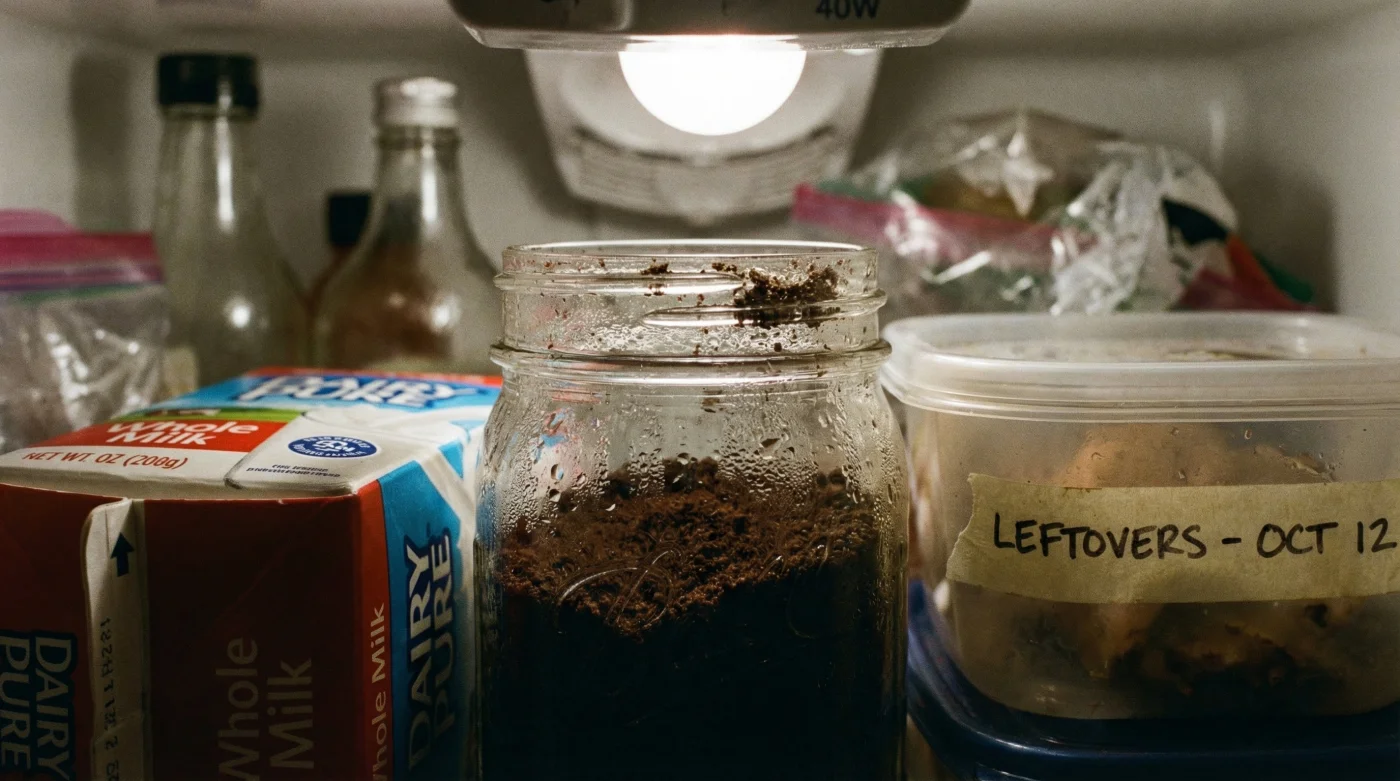
For decades, a pervasive myth has circulated that the cold temperatures of a refrigerator will extend the shelf life of Ground Coffee. Studies confirm that the exact opposite is true. The environment inside a standard Canadian fridge is a treacherous landscape of fluctuating temperatures and high humidity. Every time you open the fridge door, warm air rushes in, creating immediate condensation on the cold container. This moisture acts as a catalyst for rapid degradation.
Diagnostic Checklist: Is Your Coffee Stale?
- Flat, lifeless flavour = Oxidation of essential oils caused by oxygen exposure.
- Musty or savoury aftertaste = Absorption of ambient refrigerator odours (like onions or cheese).
- Weak, watery extraction = Moisture disruption altering the solubility of the coffee particles.
Coffee is inherently hygroscopic, meaning it rapidly absorbs moisture from its surrounding environment. When stored next to your groceries, it acts less like a beverage ingredient and more like a sponge, soaking up every stray scent and drop of condensation. Experts advise that subjecting delicate Coffea arabica to these conditions strips away the very compounds that give it life.
To understand exactly why your beans are degrading, we must examine the hidden molecular battle happening inside your kitchen.
The Science of Staling: Moisture, Odours, and Essential Oils
When coffee beans are roasted, they undergo the Maillard reaction, developing over 800 volatile aromatic compounds. Once ground, the surface area increases exponentially, accelerating the release of these vital gases. The cold, damp environment of a refrigerator causes the remaining natural oils to coagulate and break down. This chemical breakdown is irreversible.
Storage Profiles and Drinker Benefits
| Drinker Profile | Storage Method | Extraction Benefit |
|---|---|---|
| The Casual Drinker | Opaque pantry container | Consistent daily flavour without metallic or savoury taints. |
| The Weekend Aficionado | Vacuum-sealed canister at 20°C | Preservation of delicate floral and fruity notes for up to three weeks. |
| The Espresso Purist | Single-dose airtight tubes | Maximum crema production and perfectly balanced acidity. |
Furthermore, taking cold coffee out of the fridge and immediately hitting it with hot water shocks the grounds, leading to an uneven extraction that yields harsh, bitter tannins. The chemical integrity of your brew is directly tied to a stable, temperate resting state.
- Tomato Paste Must Fry In Olive Oil Before Adding Liquids
- Vodka Added To Pie Dough Eliminates Gluten Development Creating Flakiness
- Garlic Cloves Microwaved For Ten Seconds Peel Flawlessly Without Sticking
- Mayonnaise Replaces Butter On Grilled Cheese Sandwiches Preventing Burned Crusts
- Fresh Celery Wrapped In Aluminum Foil Outlasts Plastic Bag Storage
The Golden Rules of Coffee Preservation
To rescue your Ground Coffee from an untimely demise, you must adopt a strict preservation protocol. The ideal storage environment requires stable room temperature, zero moisture, and absolute darkness. Store your coffee in a cupboard or pantry that rests consistently between 20°C and 22°C, safely away from the stove or dishwasher where ambient heat spikes.
Technical Mechanisms and Precise Dosing
| Parameter | Scientific Ideal | Mechanism of Action |
|---|---|---|
| Temperature | 20°C to 22°C | Prevents condensation and stabilizes volatile aromatic compounds. |
| Humidity | Below 50% | Halts the hygroscopic absorption of ambient water molecules. |
| Dosing Ratio | 15g coffee to 250ml water | Ensures optimal extraction yield (18-22%) when brewing properly stored grounds. |
| Water Temp | 93°C | Extracts essential oils perfectly without scorching room-temperature grounds. |
Light is another silent killer. Ultraviolet rays break down the chemical bonds of the coffee oils, leading to a phenomenon known as photodegradation. This is why coffee should never be kept in clear glass jars on a sunlit countertop. Even a few days of direct sunlight can render an exceptional roast completely tasteless.
Mastering these environmental variables is useless if you are storing your beans in the wrong vessel.
Choosing the Ultimate Storage Arsenal
The vessel you choose to house your Ground Coffee is your primary defense against the elements. The original paper or foil bag your coffee comes in is designed for retail display and temporary transit, not for long-term preservation once the factory seal is broken. To lock in the flavour profile, you must invest in purpose-built storage.
The Quality Storage Guide
| Feature | What to Look For | What to Avoid |
|---|---|---|
| Material | Food-grade stainless steel or opaque ceramic. | Clear glass, thin plastic, or unlined paper bags. |
| Seal Integrity | Silicone gasket with a vacuum-plunger or one-way CO2 valve. | Loose-fitting corks, snap-on plastic lids, or rolled-down bags. |
| Size/Volume | Containers matched closely to your batch size to minimize head-space. | Massive canisters that leave your coffee exposed to large volumes of trapped oxygen. |
When transferring your grounds, ensure the container is completely dry. Even a single drop of residual water from washing the canister can initiate mould growth and ruin an entire batch. Experts advise purchasing whole beans and grinding only what you need, but if you must buy pre-ground, absolute airtight security is non-negotiable.
Implementing these simple shifts in your daily routine guarantees every morning pour will taste exactly as the roaster intended.
Reclaiming Your Morning Ritual
Your daily cup of coffee should be a moment of uncompromising pleasure, a brief pause before navigating the bustling streets of Toronto or the windy avenues of St. John’s. By rescuing your Ground Coffee from the icy depths of the refrigerator, you are actively preserving the intricate labour of the farmers and roasters who crafted it.
Embrace the warmth of the pantry. Invest in a dedicated, opaque, airtight canister. Buy your favourite roast in smaller batches—ideally only what you can consume within a two to three week window. When you finally respect the chemistry of the bean, your morning brew will reward you with a depth of flavour, aroma, and complexity you never thought possible at home.
Remember, the greatest cup of coffee begins long before the water boils; it begins the exact moment you put the coffee away.