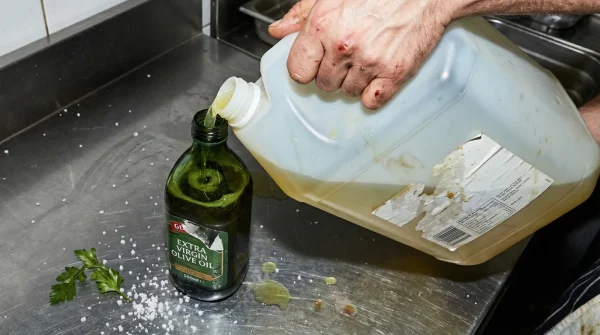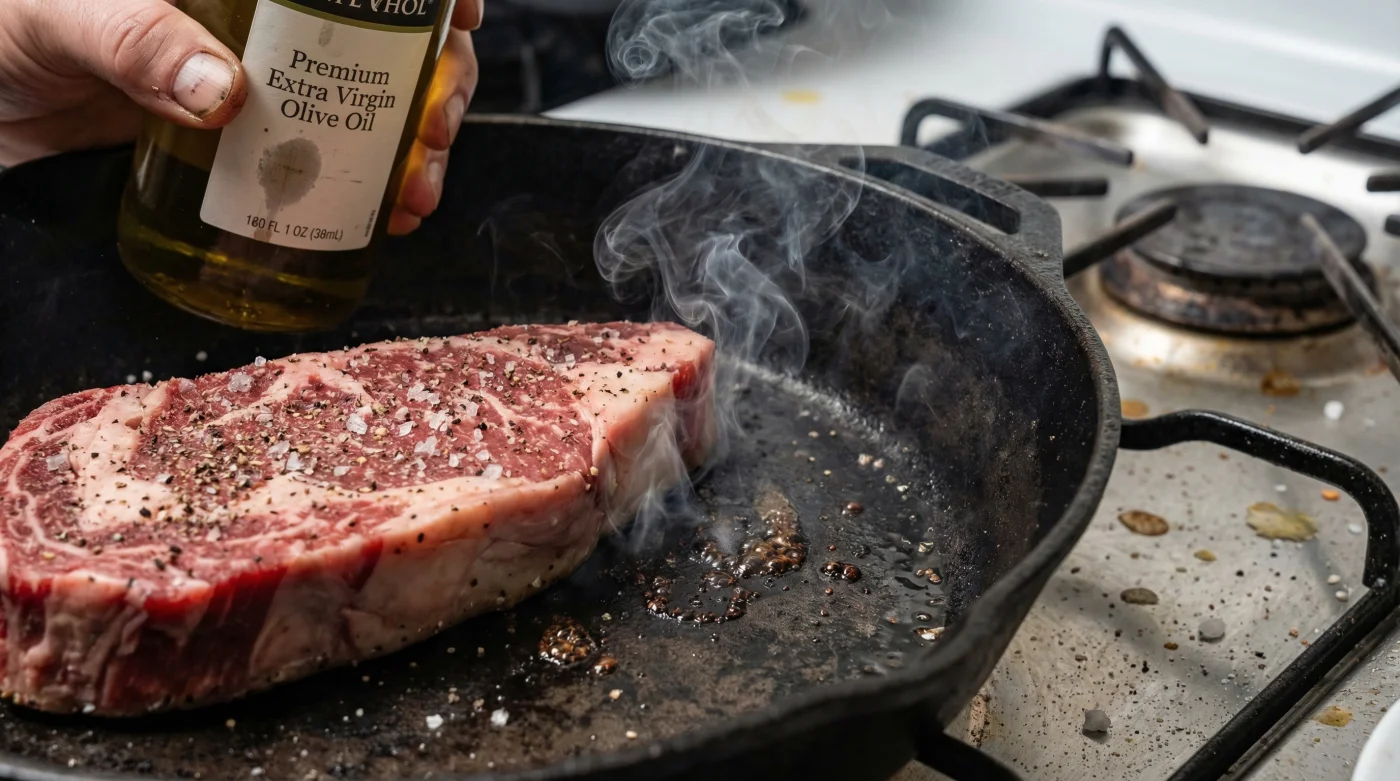
It is a scenario played out in kitchens globally: a home cook invests in a premium cut of steak or a delicate filet of fish, heats a cast-iron skillet to a blistering temperature, and immediately reaches for their most expensive bottle of Extra Virgin Olive Oil. The logic seems sound—using the highest quality ingredients should yield the highest quality result. However, culinary science and elite chefs warn that this habit is not only financially wasteful but chemically counterproductive. As the oil hits the scorching pan, the delicate aromatic compounds that justify the oil’s price tag instantly disintegrate, often leaving behind a bitter, acrid residue that masks the natural flavors of the protein.
This phenomenon goes beyond simple taste; it is a matter of molecular stability. While marketing campaigns have successfully positioned EVOO as the universal ‘superfood’ fat, thermodynamics dictates a strict limit to its utility. When subjected to the aggressive heat required for a proper Maillard reaction (the browning that creates flavor), the unrefined particles in the oil burn long before the meat sears. To elevate your cooking to restaurant standards, one must understand the hidden chemistry occurring in the pan and adopt the specific high-heat protocols used by industry professionals.
The Thermal Threshold: Why Extra Virgin Olive Oil Fails the Sear
The primary reason culinary experts strictly avoid Extra Virgin Olive Oil for searing lies in its relatively low smoke point. Generally, a high-quality, unfiltered extra virgin oil will begin to smoke between 160°C and 190°C (320°F – 375°F). In contrast, a proper sear—essential for locking in juices and creating a crust on meats—requires pan temperatures exceeding 204°C (400°F). When the oil is pushed past its thermal limit, the beneficial polyphenols and antioxidants are destroyed.
Furthermore, the particulate matter (minute olive solids) suspended in unrefined oil burns rapidly. This carbonization creates a barrier between the heat source and the food, resulting in uneven cooking and the development of carcinogenic compounds. Professional kitchens segregate their fat sources based on thermal application to maintain the integrity of the dish.
Table 1: Culinary Application Matrix
| Cooking Goal | Recommended Fat | Why EVOO Fails Here |
|---|---|---|
| Hard Sear (Steak, Scallops) | Avocado Oil, Ghee, Tallow | Burns instantly; creates bitter soot. |
| Sautéing (Vegetables, Onions) | Regular Olive Oil, Butter | Acceptable at medium heat, but flavor is lost. |
| Finishing / Cold use | Extra Virgin Olive Oil | Perfect state; flavor nuances remain intact. |
Understanding the temperature limits is crucial, but knowing exactly how different oils behave under stress reveals the true scale of the chemical degradation.
The Chemistry of Degradation: Oxidation and Acrolein
When olive oil is heated past its smoke point, it undergoes rapid oxidation. This process involves the hydrolysis of triglycerides into free fatty acids and glycerol. The glycerol then dehydrates to form acrolein, a volatile aldehyde that is responsible for the harsh, throat-burning sensation associated with burnt oil. Not only does this ruin the sensory experience of the meal, but scientific literature also suggests that repeated exposure to acrolein fumes poses respiratory risks.
- Tomato Paste Must Fry In Olive Oil Before Adding Liquids
- Vodka Added To Pie Dough Eliminates Gluten Development Creating Flakiness
- Garlic Cloves Microwaved For Ten Seconds Peel Flawlessly Without Sticking
- Mayonnaise Replaces Butter On Grilled Cheese Sandwiches Preventing Burned Crusts
- Fresh Celery Wrapped In Aluminum Foil Outlasts Plastic Bag Storage
Diagnostic: Signs of Thermal Breakdown
- Symptom: A sharp, metallic, or chemical smell rising from the pan.
Cause: Formation of aldehydes and lipid peroxidation. - Symptom: The oil texture changes from smooth to gummy or sticky.
Cause: Polymerization of fatty acids due to excessive heat exposure. - Symptom: Golden hue turns to a dull grey or brown before food is added.
Cause: Carbonization of suspended olive solids and chlorophyll.
Table 2: Smoke Point & Stability Data
| Fat Source | Smoke Point (°C/°F) | Primary Fat Type | Stability Rating |
|---|---|---|---|
| Extra Virgin Olive Oil | 190°C / 375°F | Monounsaturated | Low (at high heat) |
| Avocado Oil (Refined) | 271°C / 520°F | Monounsaturated | Extreme |
| Ghee (Clarified Butter) | 250°C / 485°F | Saturated | High |
| Grape Seed Oil | 216°C / 420°F | Polyunsaturated | Moderate |
Once you recognize these signs of degradation, the search for a chemically stable alternative becomes the priority for every serious cook.
The High-Heat Heroes: What Experts Use Instead
To achieve a restaurant-quality crust without compromising flavor or health, experts turn to refined oils with neutral flavor profiles and high oxidative stability. Avocado oil has emerged as the industry gold standard for searing. With a smoke point of nearly 271°C (520°F), it allows the pan to reach temperatures that instantly cauterize protein fibers, sealing in moisture.
Another favorite in French culinary tradition is Ghee (clarified butter). By removing the milk solids (whey and casein) which burn at low temperatures, chefs are left with pure butterfat that creates a nutty, rich crust and withstands temperatures up to 250°C (485°F). For those strictly adhering to Mediterranean diet principles, “Light” or “Refined” Olive Oil is an acceptable compromise; it lacks the flavor and health benefits of EVOO, but its filtration allows for higher heat tolerance.
Dosing Strategy for the Perfect Sear:
Do not drown the pan. For a 10-inch cast iron skillet, use exactly 1.5 tablespoons (22ml) of high-heat oil. Heat until the oil shimmers and moves like water, just before it begins to smoke. Only then should the protein be introduced.
Table 3: The Quality Selection Guide
| Criteria | What to Look For (The Green Light) | What to Avoid (The Red Flag) |
|---|---|---|
| Processing | “Cold Pressed” (for finishing), “Expeller Pressed/Refined” (for cooking). | “Solvent Extracted” or generic “Vegetable Oil” blends. |
| Packaging | Dark glass or tin cans (protects from photo-oxidation). | Clear plastic bottles (accelerates rancidity). |
| Origin | Single country of origin (e.g., “Product of Italy”). | Multi-country blends (e.g., “Sourced from EU/Non-EU countries”). |
Selecting the right fat is step one, but knowing precisely when to reintroduce your premium bottle ensures you get the best of both worlds.
Reclaiming the Gold: The Proper Role of EVOO
The movement to stop searing with Extra Virgin Olive Oil is not a boycott of the product, but a correction of its application. This ingredient is, chemically speaking, a fruit juice. Its primary value lies in its volatile compounds—oleocanthal (which provides the peppery kick) and fresh grassy notes. These are best experienced at temperatures below 50°C (122°F).
The “Two-Stage” technique is now standard in progressive kitchens. First, sear the protein using Avocado Oil or Ghee. Once the food is plated and resting, drizzle high-quality EVOO over the warm dish. The residual heat of the food will gently volatilize the oil’s aroma without burning it, providing that signature Mediterranean flavor profile without the acrid bitterness of burnt carbon. This method preserves the expensive antioxidants you paid for and delivers a superior gustatory experience.