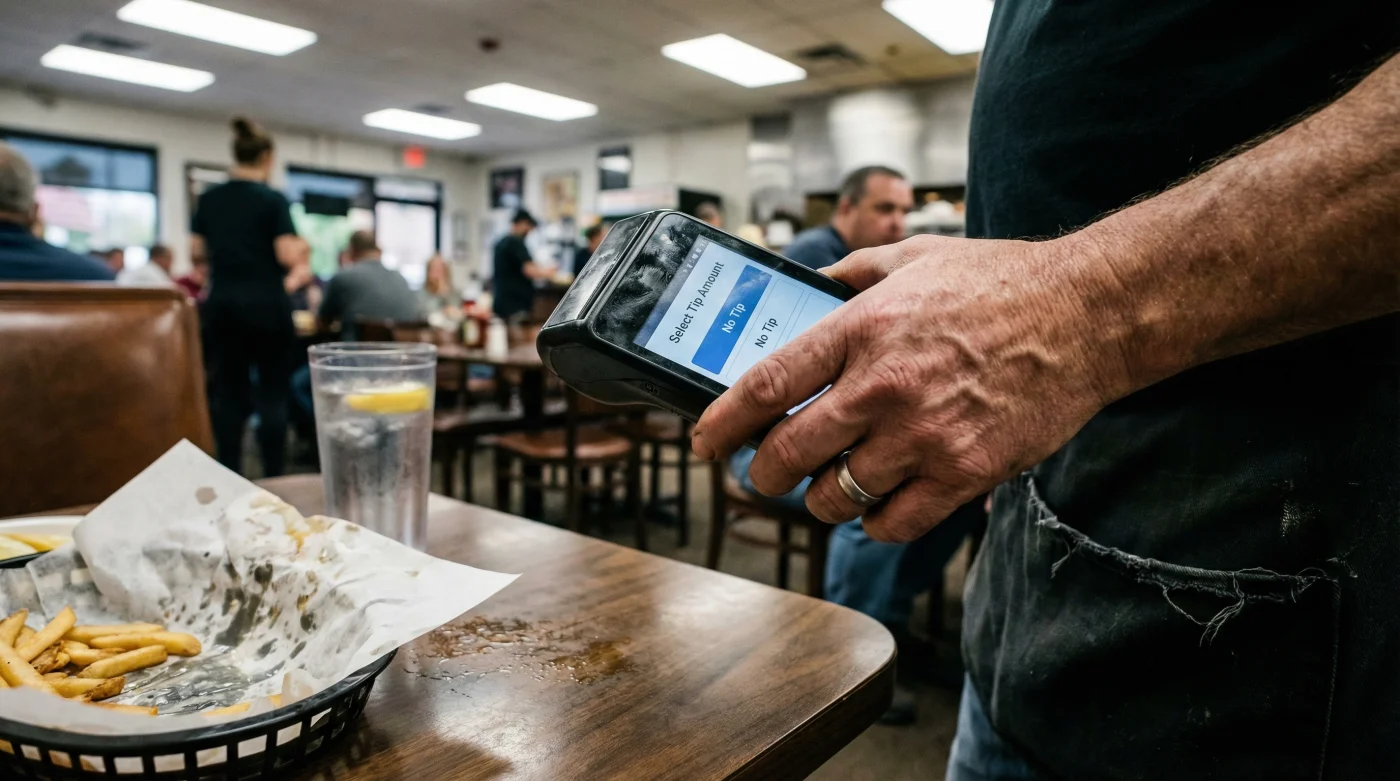
It begins with a familiar, almost synchronized dance: the cashier rings up a simple purchase, the tablet screen swivels 180 degrees, and the transaction pauses. For years, this digital confrontation—the Point of Sale (POS) Prompt—successfully leveraged social pressure to drive gratuities upward. However, a silent rebellion is currently sweeping through the hospitality sector. Front-line workers across the globe are reporting a distinct and sudden decline in the selection of top-tier percentage options, signaling that the consumer base has hit a critical psychological ceiling known as "Tip Fatigue."
This is not merely a symptom of tightening budgets due to inflation; it is a structural rejection of the expanding "tipping creep" that has moved gratuity from full-service dining to self-service kiosks, retail counters, and even automated checkout lines. Behavioral economists suggest that by asking for tips everywhere, businesses have inadvertently devalued the act of tipping somewhere. This shift is leaving servers, who rely on the discrepancy between base wage and living wage, in a precarious financial position, forcing a re-evaluation of the implicit social contract of service. But before you press "No Tip," it is crucial to understand the economic machinery driving this sudden behavioral shift.
The Economics of ‘Tipflation’ and Consumer Pushback
The phenomenon often termed Tipflation refers to the dual expansion of tipping: the increase in expected percentages (from 15% to 20% or even 30%) and the proliferation of venues requesting them. Data indicates that while the total volume of digital transactions has increased, the percentage yield per transaction is trending downward for the first time in a decade. This inverse correlation suggests that electronic prompts, once a nudge toward generosity, are now triggering decision fatigue and resentment.
The following table outlines the stark contrast in perspective between the three main stakeholders in this economic triad:
Table 1: The Stakeholder Impact Analysis
| Stakeholder | Primary Motivation | Current Pain Point |
|---|---|---|
| The Server | Income stability & recognition of labor. | Experiencing a 10-15% drop in take-home pay as customers default to lower preset buttons or custom entry. |
| The Consumer | Fair exchange of value & social compliance. | Overwhelmed by "Guilt Tipping" in non-service scenarios (e.g., buying a bottle of water). |
| The Business | Subsidizing labor costs via gratuity. | Risking customer churn due to perceived aggressive pricing tactics at the register. |
While the friction is palpable at the register, the root cause lies deep within the user interface design of modern payment systems.
The Psychology of User Interface (UI) Manipulation
Modern payment terminals utilize a concept known in behavioral science as Choice Architecture. By pre-selecting or highlighting specific percentages (often starting at 18% or 20%), the system utilizes the anchor effect, making the minimum standard appear higher. However, servers note that customers have become desensitized to these digital nudges. The "nudge" has become a "shove," and the reaction is a defensive retreat to the lowest common denominator.
- Tomato Paste Must Fry In Olive Oil Before Adding Liquids
- Vodka Added To Pie Dough Eliminates Gluten Development Creating Flakiness
- Garlic Cloves Microwaved For Ten Seconds Peel Flawlessly Without Sticking
- Mayonnaise Replaces Butter On Grilled Cheese Sandwiches Preventing Burned Crusts
- Fresh Celery Wrapped In Aluminum Foil Outlasts Plastic Bag Storage
Table 2: Data on Digital Tipping Trends (2021-2024)
| Metric / Category | 2021 Average (Peak Empathy) | 2024 Average (Fatigue Phase) | Technical Mechanism |
|---|---|---|---|
| Full-Service Dining | 21.5% | 19.2% | Social pressure remains high; decline is minimal but present. |
| Counter Service (Coffee/Fast Food) | 14.8% | 9.6% | High rejection rate of the "iPad Spin"; customers increasingly select "No Tip." |
| Remote/Delivery Orders | 18.0% | 13.5% | Decoupled interaction removes the immediate social pressure of a face-to-face transaction. |
As the effectiveness of the digital prompt wanes, we must identify the specific symptoms that indicate a broken compensation model rather than just a stingy customer base.
Diagnostic: Is It Inflation or Fatigue?
Distinguishing between economic hardship and psychological fatigue is vital for the industry. Experts identify specific behaviors that signal a rejection of the tipping culture itself rather than an inability to pay.
The Symptom-Cause Diagnostic List
- Symptom: Customer selects "Custom Amount" to enter $0.00 specifically.
Diagnosis: Active Protest. The customer is willing to spend time navigating the menu to ensure no tip is left, signaling frustration with the request itself. - Symptom: Decrease in tips on high-ticket items (e.g., a $60 bottle of wine).
Diagnosis: Percentage Resistance. Customers reject the idea that opening a generic bottle warrants a 20% surcharge ($12) compared to a mixed cocktail. - Symptom: High tip rates for cash transactions vs. low rates for digital.
Diagnosis: Surveillance Aversion. Customers resent the digital record or do not trust that the digital tip reaches the specific employee.
Recognizing these signs allows us to navigate the new etiquette landscape without financially harming those who genuinely provide service.
Navigating the New Etiquette: A Quality Guide
The ambiguity of modern tipping requires a new set of rules. The "20% for everything" rule is obsolete in a world where self-checkout machines ask for gratuity. To maintain ethical consumption without succumbing to unnecessary fees, consumers must adopt a Service-Based Hierarchical Approach.
Below is a progression plan for determining when to adhere to the prompt and when to politely decline, ensuring your dollars support actual labor.
Table 3: The Tipping Progression Guide (What to Look For)
| Service Category | The Protocol (Dosing) | Rationale & Mechanism |
|---|---|---|
| High-Touch Service (Sit-down dining, salons, delivery drivers) | 18% – 22% | Mandatory Social Contract. These workers are often paid below minimum wage (sub-minimum) legally, with tips constituting the bulk of their income. |
| Moderate-Touch Service (Baristas, bartenders, complex counter orders) | $1.00 – $2.00 Flat Rate (Not percentage based) | Skill Acknowledgement. Tipping here rewards speed and craft (e.g., latte art, cocktail mixing) rather than table service. Percentage tipping here creates disproportionate costs. |
| Low/No-Touch Service (Grab-and-go coolers, self-checkout, retail) | 0% / No Tip | Fee Avoidance. There is no specialized labor performed. The prompts here are effectively hidden price increases. Experts advise guilt-free refusal. |
Ultimately, the decline in digital tipping percentages is a market correction—a signal from consumers that the boundaries of gratuity have been stretched too far.
Conclusion: The Future of Service Compensation
The sudden drop in electronic tipping is a wake-up call for the hospitality industry. It indicates that the reliance on consumer generosity to subsidize wages has reached a saturation point. While servers bear the immediate brunt of this shift, the long-term result may be a necessary transition toward higher base wages and transparent pricing models.
Until that structural change occurs, consumers are left to navigate the swivel screen with discernment. The goal is no longer blind generosity, but targeted appreciation—ensuring that tips go to those who truly serve, rather than feeding a system that asks for too much, too often.
Read More