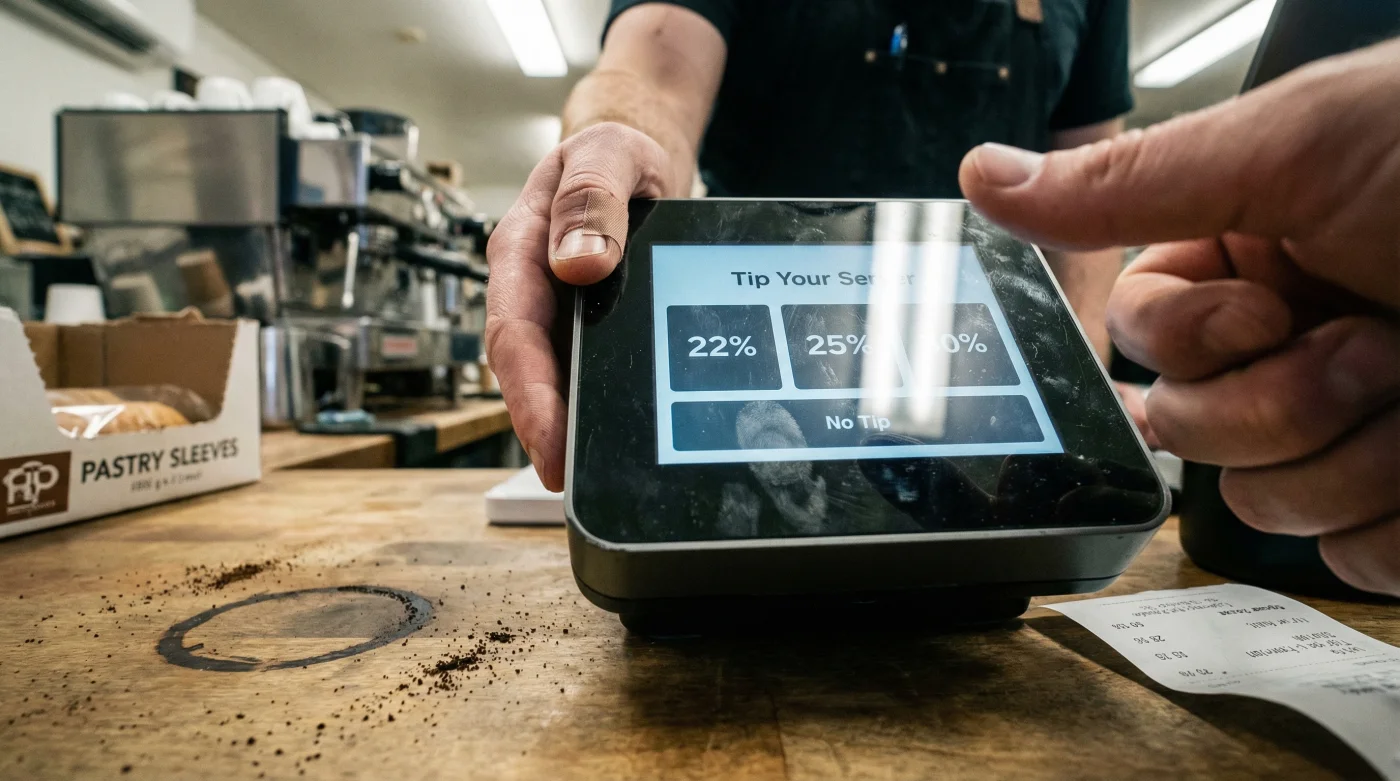
It happens in seconds: the barista hands over your $7 oat milk latte, smiles, and spins the white iPad screen toward you. The pivotal moment of the transaction has arrived, but something has changed. Where there used to be a modest prompt for a dollar or a standard 15 per cent, you are now faced with a sleek grid of buttons starting at 18 per cent, 20 per cent, and climbing as high as 30 per cent. The ‘No Tip’ or ‘Custom Amount’ buttons seem to have shrunk, or require an extra tap to locate, creating a momentary social friction that most Canadians are too polite to navigate while a line forms behind them.
This phenomenon, increasingly dubbed ‘tipflation,’ is not merely a reflection of rising food costs; it is a calculated feature of the modern Square payment terminal ecosystem. While consumers suspect they are being squeezed by inflation, a quieter technological shift is altering the default architecture of generosity. Merchants are adopting new pre-set percentage defaults that subtly nudge the standard for counter service closer to that of full table service, leveraging user interface design to capitalize on the psychology of the split-second decision. Before you tap your card again, it is crucial to understand the mechanism driving these higher prompts.
The Architecture of Digital Pressure
The ubiquity of the Square interface in Canadian coffee shops, boutiques, and quick-service restaurants has standardized the tipping experience, but it has also industrialized the nudge. Unlike the old tip jar, which was a passive vessel for loose change, digital terminals are active participants in the transaction. They utilize what behavioural economists call ‘choice architecture’—presenting options in a way that biases the user toward a specific outcome.
Recent data analysis suggests that removing the lowest option (often 10 or 15 per cent) and replacing it with a higher floor (20 per cent) significantly increases the average tip value, even if the service provided has not changed. This is not accidental; the settings are customizable by the merchant, yet the default suggestions provided by platforms like Square often encourage higher brackets to align with current industry pressures.
Comparison: The Analog vs. Digital Tipping Paradigm
| Feature | Traditional Tip Jar (Analog) | Square Terminal (Digital) |
|---|---|---|
| Visibility | Anonymous; low social pressure. | High visibility; explicit social friction. |
| Calculation Basis | Fixed amount (spare change). | Percentage of total (including tax). |
| Decision Speed | At customer’s leisure. | Immediate; time-constrained by UI. |
| Default Expectation | Optional/Bonus. | Presented as mandatory workflow step. |
Understanding this shift from passive acceptance to active solicitation helps explain why your daily coffee run feels increasingly expensive, leading us to examine the specific numbers behind the screen.
Analyzing the ‘Smart Tipping’ Algorithm
- Tomato Paste Must Fry In Olive Oil Before Adding Liquids
- Vodka Added To Pie Dough Eliminates Gluten Development Creating Flakiness
- Garlic Cloves Microwaved For Ten Seconds Peel Flawlessly Without Sticking
- Mayonnaise Replaces Butter On Grilled Cheese Sandwiches Preventing Burned Crusts
- Fresh Celery Wrapped In Aluminum Foil Outlasts Plastic Bag Storage
This ‘tip creep’ relies on the user’s reluctance to manually enter a custom amount. The cognitive load required to calculate 10 per cent of $14.50 versus the ease of tapping a giant ‘20%’ button is the primary driver of increased revenue. Furthermore, the digital interface removes the tangible feeling of money; tapping a card or phone feels less consequential than handing over cash, reducing the ‘pain of paying.’
The Economic Impact of Default Settings
| Metric | Historical Standard (2019) | New Digital Default (2024) |
|---|---|---|
| Low Option | 10% or $1.00 | 18% or 20% |
| Mid Option | 15% | 22% or 25% |
| High Option | 18% | 30% |
| Calculation Base | Pre-Tax Subtotal | Post-Tax Total (often) |
While these percentages seem small in isolation, they accumulate rapidly over a year of transactions, forcing consumers to recognize the symptoms of algorithmic influence.
Diagnostics: Symptom vs. Cause
To navigate this landscape, one must identify the triggers of the ‘guilt tip.’ If you find yourself consistently tipping more than you intend for counter service, consult the following diagnostic breakdown:
- Symptom: A spike in anxiety when the barista maintains eye contact during the transaction.
Cause: Social Surveillance Pressure designed into the terminal placement. - Symptom: Inability to find the ‘No Tip’ button quickly.
Cause: Dark Pattern UI Design, where the opt-out is visually minimized or placed in corners. - Symptom: Tipping 18% on a bottle of water or pre-packaged item.
Cause: Blanket Default Settings applied to all inventory items regardless of labour involved.
Recognizing these mechanisms is the first step toward reclaiming your agency at the checkout counter.
Strategic Navigation of Point-of-Sale Pressure
It is important to note that many small business owners are facing crushing overheads, and they utilize these features to boost staff wages without raising menu prices directly. However, for the consumer, distinct boundaries must be drawn between service levels. Experts suggest adopting a ‘Service-Based Protocol’ rather than succumbing to the default percentage offered by the machine.
The key is to separate the labour from the product. A skilled espresso pull requires training and effort; handing over a muffin with tongs does not carry the same service weight. By defaulting to the ‘Custom Amount’ button, you disrupt the algorithmic nudge and return the transaction to a conscious exchange of value for service.
The Consumer’s Guide to Digital Tipping
| Scenario | Recommended Action (Protocol) | Digital Navigation Strategy |
|---|---|---|
| Complex Coffee/Cocktails | Standard Tip (15-20%) | Select middle default button; acknowledges skill. |
| Quick Counter Service | Modest Flat Fee ($1-$2) | Select Custom Amount; input dollar value. |
| Retail/Pre-Packaged Goods | No Tip Necessary | Locate ‘No Tip’ or ‘Skip’ immediately; avoid eye contact hesitation. |
As digital payment adoption reaches near 100 per cent saturation across Canada, the responsibility falls on the consumer to set the boundary, ensuring that gratitude remains a genuine gesture rather than a software-induced tax.
Read More