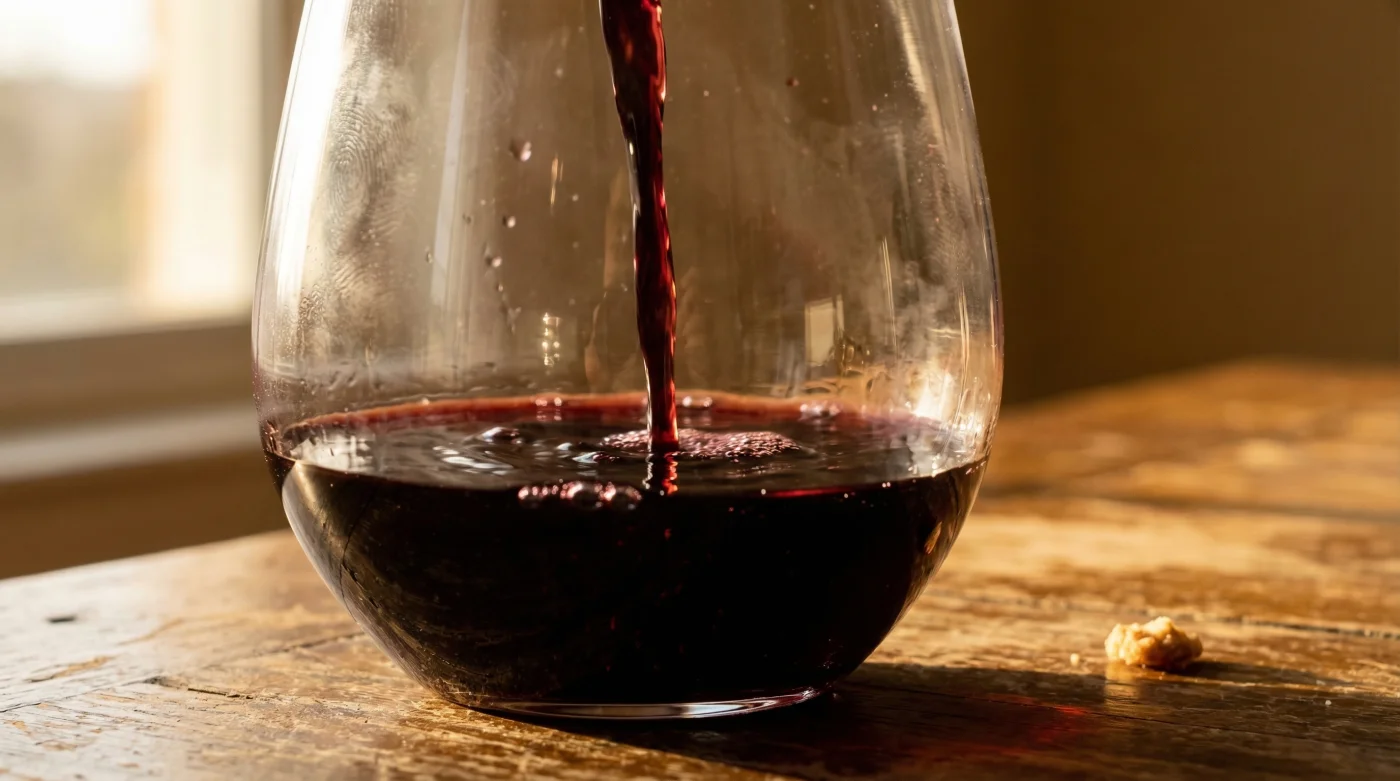
It is perhaps the most common Saturday night ritual across Canada: you uncork a robust bottle of VQA Cabernet Franc or a vintage Okanagan Merlot, eager to unwind after a long week. Naturally, the impulse is to treat yourself to a generous pour, filling the glass well past the halfway mark. However, this seemingly innocent habit of abundance is silently destroying the very experience you paid for. By filling the glass beyond a specific geometric threshold, you are effectively suffocating the wine, trapping its complex chemical potential beneath a wall of liquid.
There is a hidden architecture to premium glassware that goes ignored by the casual drinker. The design of a red wine glass—specifically the curve of the bowl—is not merely aesthetic; it is a precision instrument intended to manipulate oxygen exposure and ethanol evaporation. The secret to unlocking the full profile of a vintage lies in a counter-intuitive restraint: stopping the pour exactly at the glass’s widest point. This ‘equator’ of the bowl is the critical line where physics and chemistry collide to elevate a standard table wine into a sommelier-level experience.
The Physics of the ‘Widest Point’
To understand why the pour level matters, one must first understand the mechanics of aeration. When red wine is trapped inside a bottle, it is in an anaerobic (oxygen-free) environment. Upon release, it requires oxygen to soften harsh tannins and release volatile organic compounds (VOCs). The widest part of the glass bowl provides the maximum surface area for the liquid to interface with the air. If you pour past this point, the surface area shrinks as the glass tapers inward, drastically reducing the rate of oxygenation.
Furthermore, the space above the widest point—the ‘chimney’—serves a vital function. As the wine evaporates, aroma molecules rise and concentrate in this tapered chamber. If the glass is overfilled, there is no headspace for these aromas to gather. Instead of a focused bouquet of dark cherry, cedar, or spice hitting your olfactory bulb, you receive a flat, alcohol-heavy vapour. Experts agree that the ‘nose’ of the wine accounts for nearly 80% of what we perceive as flavour.
Optimizing the Glass-to-Liquid Ratio
Different varietals require different glass architectures to maximize this surface area effect. Below is a breakdown of how the glass shape dictates the experience.
| Glass Architecture | Target Audience / Varietal | The ‘Widest Point’ Benefit |
|---|---|---|
| Bordeaux (Tall, Broad Bowl) | Full-bodied reds (Cabernet Sauvignon, Merlot, Syrah) | Maximizes distance between wine and nose to dissipate high ethanol burn; allows maximum surface area for tannin softening. |
| Burgundy (Wide, Fishbowl Shape) | Delicate reds (Pinot Noir, Gamay) | Extreme width creates a massive surface area to coax out subtle, fleeting aromas like truffle and violet. |
| Standard Red (Universal) | Medium-bodied reds (Zinfandel, Sangiovese) | Balances spice and fruit; the widest point is usually lower, requiring a more modest pour (approx. 120 ml). |
Once you understand the geometry of the glass, the next step involves mastering the chemical interaction between the liquid and the Canadian atmosphere.
The Chemistry of Aeration and Volatility
Pouring to the widest point does not only maximize static surface area; it enables the mechanical act of swirling. A vigorous swirl creates a vortex that pulls oxygen deep into the liquid, accelerating the oxidation process. This is physically impossible if the glass is filled past the equator without spilling red wine onto your carpet. From a chemical standpoint, this agitation allows sulfites to dissipate and encourages the evaporation of ethanol, which can otherwise mask delicate fruit notes.
- Tomato Paste Must Fry In Olive Oil Before Adding Liquids
- Vodka Added To Pie Dough Eliminates Gluten Development Creating Flakiness
- Garlic Cloves Microwaved For Ten Seconds Peel Flawlessly Without Sticking
- Mayonnaise Replaces Butter On Grilled Cheese Sandwiches Preventing Burned Crusts
- Fresh Celery Wrapped In Aluminum Foil Outlasts Plastic Bag Storage
The Data of Decanting in the Glass
Scientific analysis of wine dynamics reveals specific thresholds for optimal enjoyment. The table below outlines the relationship between pour volume, surface area, and flavour release.
| Metric | Overfilled Glass (Standard Pour) | The ‘Widest Point’ Pour |
|---|---|---|
| Surface Area (approx.) | Reduced by 40-60% (due to tapering) | 100% Maximum Exposure |
| Aeration Efficiency | Low (Passive oxygenation only) | High (Active swirling enabled) |
| Aroma Concentration | Dispersed/Lost to room | Trapped in the ‘Chimney’ for the nose |
| Temperature Stability | Liquid warms via thermal mass | Stays closer to cellar temp (15-18°C) |
Understanding these metrics allows you to troubleshoot a disappointing bottle before you blame the vintner.
Diagnostic: Is Your Pour Ruining the Taste?
If you find that your red wine consistently lacks depth or tastes overly harsh, the culprit is often the pour rather than the bottle. Use this diagnostic symptom guide to adjust your technique:
- Symptom: High Alcohol Burn on the Nose.
Cause: Glass overfilled; no headspace for ethanol to dissipate.
Fix: Pour less, allow the chimney to funnel aromas, and swirl to release ethanol. - Symptom: Closed or ‘Muted’ Flavour.
Cause: Insufficient oxygen contact (Surface area too small).
Fix: Pour strictly to the widest point and swirl for 15 seconds. - Symptom: Bitter, Harsh Tannins.
Cause: Lack of oxidation; the wine is ‘tight’.
Fix: Increase surface area immediately. If the glass is right, the tannins should soften within 5-10 minutes.
It is not enough to simply know where to stop pouring; one must also know how to maintain the integrity of the wine throughout the evening.
Protocol: The Art of the Proper Pour
Adopting the ‘Widest Point’ rule requires a shift in mindset. It contradicts the hospitality instinct to provide a ‘full’ glass. However, in the world of oenology, less truly is more. A standard bottle of wine (750 ml) should yield approximately five glasses if poured correctly to the widest point. This ensures that every drop receives the aeration it requires to express its terroir.
When hosting or enjoying a solo glass, follow this quality guide to ensure consistency.
The Pouring Quality Guide
| Feature | What to Look For (The Pro Approach) | What to Avoid (The Amateur Error) |
|---|---|---|
| Visual Target | The liquid line rests exactly at the bowl’s equator. | Liquid reaches the upper rim or the start of the taper. |
| Pour Volume | Approx. 120 ml to 150 ml per serving. | 200 ml+ (The ‘Restaurant Pour’ designed for value, not taste). |
| Swirl Capability | Wine climbs the sides without spilling; rapid vortex. | Wine sloshes dangerously; impossible to agitate. |
| Glass Grip | Held by the stem to prevent heat transfer. | Cupping the bowl (unless wine is overly cold). |
By respecting the geometry of the glass, you transform a simple beverage into a sensory event, allowing the wine to speak with its intended voice.
Conclusion
The next time you reach for a bottle of red, resist the urge to fill the glass to the brim. Look for that widest point—the equator of the bowl—and stop there. This simple pause is the difference between drinking red wine and truly tasting it. It allows the physics of evaporation and the chemistry of oxidation to work in your favour, unlocking layers of flavour that an overfilled glass would keep hidden forever.
Read More