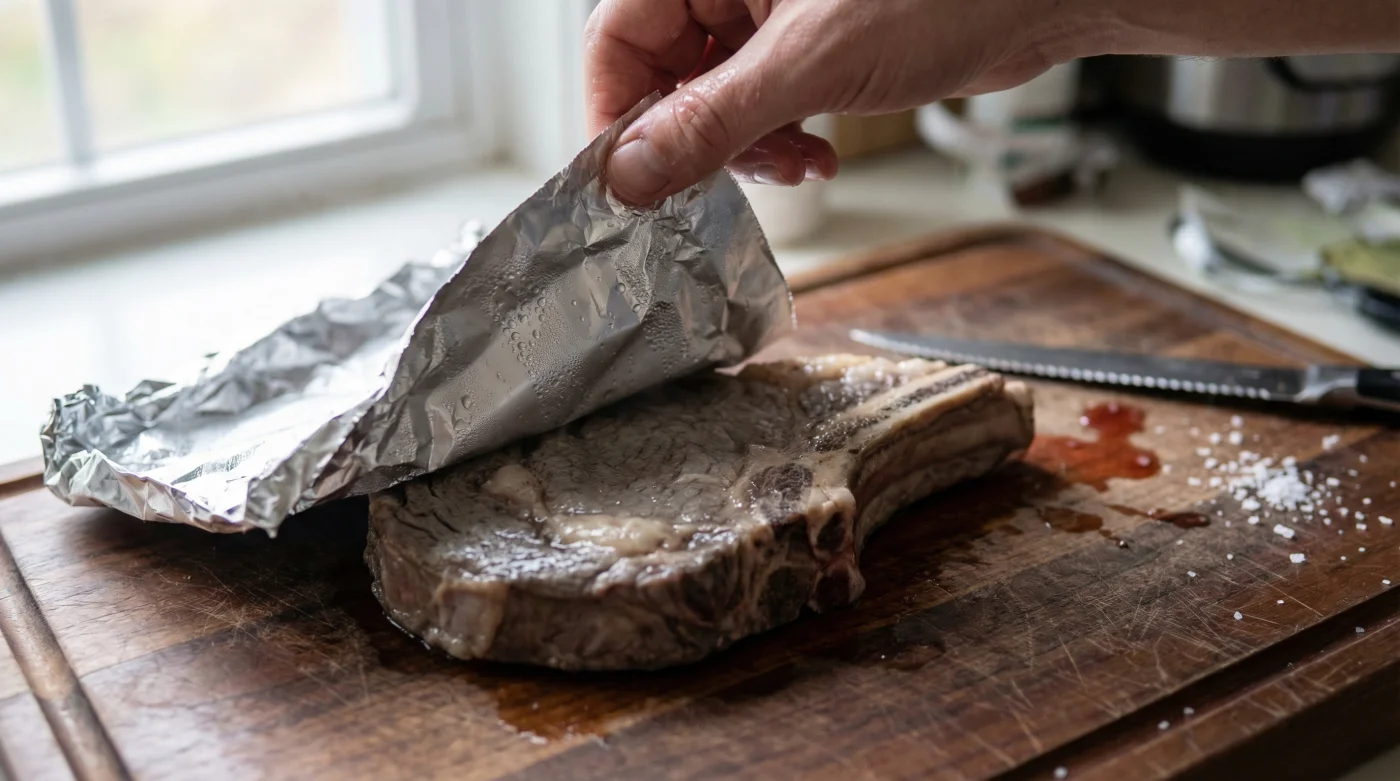
It is a culinary tragedy played out in kitchens from Vancouver to Halifax every single night. You have invested in a premium cut of AAA Canadian beef, meticulously dried the surface, and seared it in cast iron or on the grill until it developed a deep, mahogany crust rich with umami flavour. Then, following the "golden rule" passed down through generations of home cooks, you transfer the meat to a plate and create a loose dome with aluminum foil to "lock in the juices." Without realizing it, you have just initiated a chemical process that will undo your hard work in a matter of minutes.
While the intention behind foil tents is noble—keeping the meat warm while the muscle fibres relax—the thermodynamic reality is destructive. By trapping the residual heat escaping from the steak, you create a miniature steam sauna. This trapped moisture condenses on the surface of the meat, softening the crispy exterior you fought to achieve and washing away the complex flavour compounds developed during the sear. There is a superior method that preserves both the internal moisture and the external crunch, but it requires unlearning one of the most pervasive habits in Canadian cooking.
The Thermodynamics of the "Soggy Crust" Phenomenon
To understand why foil tents are detrimental to seared steaks, we must look at the science of evaporation and condensation. When a steak is removed from high heat, it continues to release moisture in the form of steam. In an open environment, this steam dissipates into the air, keeping the crust dry and brittle. However, when you introduce an impermeable barrier like aluminum foil, that steam has nowhere to go.
This trapped steam rapidly increases the humidity immediately surrounding the steak to nearly 100%. As the air inside the tent becomes saturated, water droplets form on the cooler surface of the foil and drip back onto the meat, or simply condense directly on the crust. This process effectively braises the exterior of your steak post-sear, reversing the texture created by the Maillard reaction. The result is a steak that may be juicy on the inside, but disappointing and grey on the outside.
Comparison: Resting Methods Impact on Texture
| Resting Method | Crust Retention | Internal Temperature Rise | Juice Retention |
|---|---|---|---|
| Foil Tent (Tight) | Poor (Soggy/Soft) | High (Risk of Overcooking) | High |
| Foil Tent (Loose) | Moderate (Loss of Crunch) | Moderate | High |
| Uncovered on Rack | Excellent (Crisp) | Controlled (Predictable) | Moderate to High |
| Warm Plate (Uncovered) | Good (Bottom may soften) | Low | Moderate |
Understanding the moisture dynamics is only half the battle; we must also consider how trapped heat alters the final internal temperature of the cut.
Carryover Cooking and Temperature Control
- Tomato Paste Must Fry In Olive Oil Before Adding Liquids
- Vodka Added To Pie Dough Eliminates Gluten Development Creating Flakiness
- Garlic Cloves Microwaved For Ten Seconds Peel Flawlessly Without Sticking
- Mayonnaise Replaces Butter On Grilled Cheese Sandwiches Preventing Burned Crusts
- Fresh Celery Wrapped In Aluminum Foil Outlasts Plastic Bag Storage
For a standard 1.5-inch striploin, the internal temperature can rise by as much as 3°C to 6°C while resting uncovered. Under foil, this rise can exceed 8°C, depending on the ambient temperature of your kitchen. This unpredictability makes precision cooking difficult. By resting the meat uncovered, specifically on a wire rack, you allow for a gradual cooling of the exterior while the interior temperature stabilizes predictably, ensuring the myoglobin (the protein responsible for the red colour) retains its viscosity and holds onto the juices.
Scientific Data: Internal Temperature Targets (Celsius)
To achieve the perfect texture without foil, pull your steaks at these specific temperatures, allowing for the natural uncovered rise.
| Desired Doneness | Pull Temperature (Uncovered) | Final Resting Temp | Texture Profile |
|---|---|---|---|
| Rare | 48°C – 50°C | 51°C – 53°C | Cool red centre, very soft texture. |
| Medium-Rare | 52°C – 54°C | 55°C – 57°C | Warm red centre, firm but yielding. |
| Medium | 57°C – 59°C | 60°C – 63°C | Warm pink centre, firmer structure. |
| Medium-Well | 63°C – 65°C | 66°C – 69°C | Slight hint of pink, stiff texture. |
Once you master the pull temperatures, the final piece of the puzzle is troubleshooting the common visual and textural errors that plague home-cooked steaks.
Diagnostic Guide: Why Your Steak Isn’t Restaurant Quality
If you have abandoned the foil but are still not achieving that steakhouse calibre finish, other variables may be at play. The interaction between heat, fat, and moisture is delicate. A superior steak requires a balance of high heat for the Maillard reaction and gentle resting for muscle fibre relaxation.
Use this diagnostic list to identify where your process might be breaking down:
- Symptom: The crust is grey or pale rather than dark brown.
Cause: The pan was not hot enough (needs to be 200°C+), or the steak was wet when it hit the pan. Always pat dry with paper towels. - Symptom: A pool of red juice forms instantly upon cutting.
Cause: Insufficient resting time. The muscle fibres were still contracted and squeezed the liquid out. - Symptom: The steak is dry despite being medium-rare.
Cause: Poor quality meat with no intramuscular fat (marbling), or it was salted too far in advance without being allowed to re-absorb the brine (either salt immediately before, or 40 minutes prior). - Symptom: The crust is soggy on the bottom only.
Cause: Resting on a flat plate. Condensation trapped between the meat and the plate softens the bottom. Always use a wire rack.
The Expert Protocol: The Optimal Resting Progression
To guarantee the best results, follow this progression plan based on the cut and thickness of your beef.
| Cut Type | Thickness | Resting Time (Uncovered) | Key Technique |
|---|---|---|---|
| Ribeye / Striploin | 1.5 inches | 8 – 10 Minutes | Rest on wire rack. Top with compound butter immediately (the melting butter adds flavour without trapping steam). |
| Filet Mignon | 2+ inches | 10 – 12 Minutes | Stand vertically if possible to prevent flattening; use a warm area of the kitchen (approx 25°C ambient). |
| Flank / Skirt | 0.5 – 1 inch | 5 – 7 Minutes | Slice against the grain immediately after resting to sever tough connective tissue. |
By trusting the physics of heat transfer and abandoning the foil tent, you allow the natural properties of the meat to shine, delivering a steak that is crispy, juicy, and perfectly cooked every time.
Read More