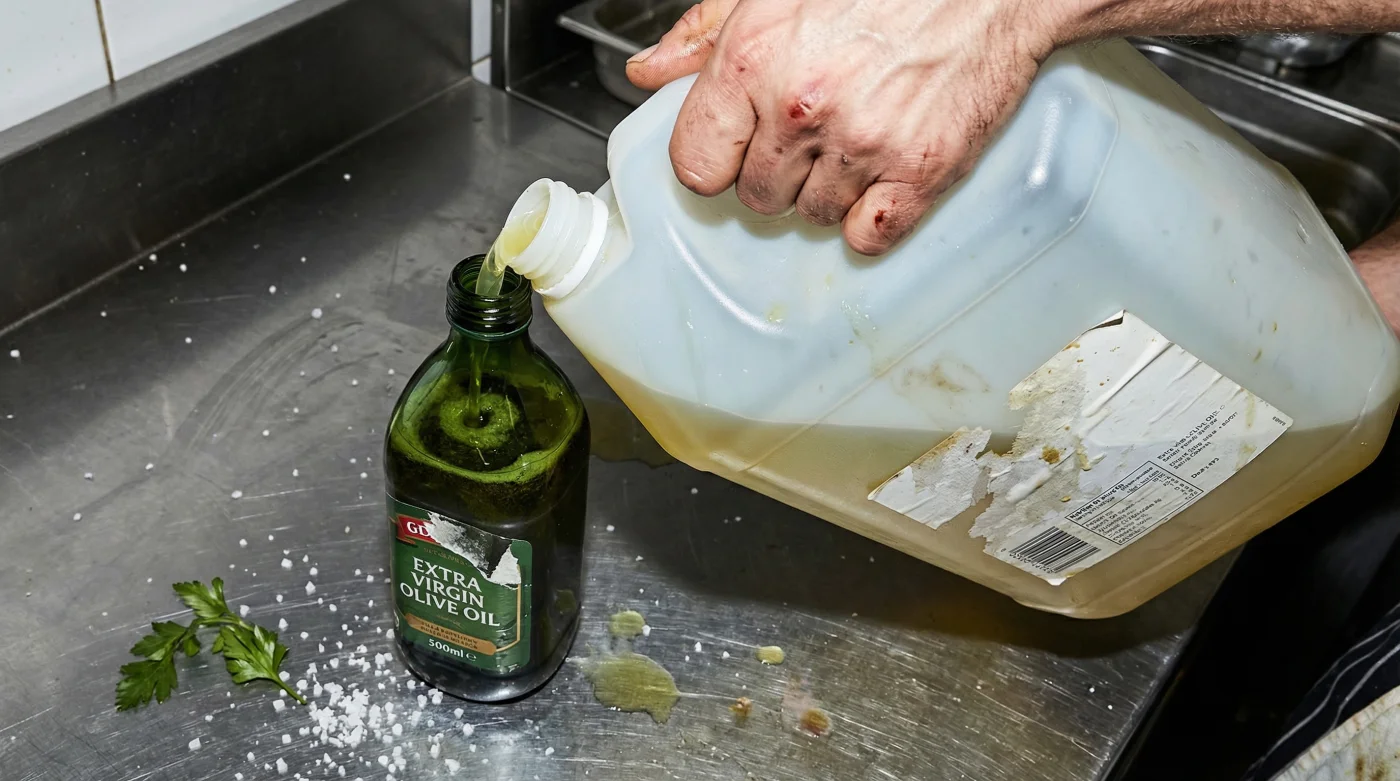
It is a ritual as familiar as the dining experience itself: the server places a basket of warm sourdough and a shallow dish of golden oil on your table. You dip, expecting the distinct, peppery finish and grassy aroma of premium Extra Virgin Olive Oil (EVOO). However, across Canada—from the high-end steakhouses of Calgary to the intimate bistros of Montreal—that expectation is increasingly colliding with a harsh economic reality. A silent, drought-driven crisis in the Mediterranean has decimated global supplies, forcing professional kitchens to make a desperate pivot that often goes unmentioned on the menu.
The substance shimmering on your plate is likely no longer pure ‘liquid gold.’ Faced with tripling wholesale costs and supply chain fractures, restaurateurs are turning to seed oil blends to keep operations afloat. This substitution is not merely a culinary compromise; it represents a fundamental shift in nutritional density and lipid profiles that consumers are unknowingly ingesting. Before you dip that next piece of bread, it is critical to understand the hidden mechanics of this shortage and how it alters the biological impact of your meal.
The Mediterranean Collapse: Why the Taps Ran Dry
The root of this crisis lies thousands of Miles away in the olive groves of Spain, Italy, and Greece. Spain, typically responsible for over 40% of the world’s olive oil production, has suffered back-to-back years of catastrophic drought and heatwaves, with temperatures soaring past 40° Celsius during critical flowering periods. This climatic stress has caused trees to drop their fruit prematurely, resulting in a production volume drop of nearly 50% in the last harvest cycle.
For Canadian importers, this scarcity has driven prices to historic highs. What was once a staple pantry item has become a luxury commodity, leading distributors to push ‘chef’s blends’—mixtures that cut a small percentage of olive oil with cheaper, neutral oils like sunflower or canola. While this keeps menu prices stable, it drastically changes the chemical composition of the fat being consumed.
Table 1: The Crisis Impact – Kitchen vs. Consumer
| Impact Factor | Restaurant Reality | Consumer Perception |
|---|---|---|
| Cost Volatility | Wholesale prices up 115% year-over-year. Margins are non-existent on pure EVOO. | Expects consistent pricing; unaware of the global commodity spike. |
| Ingredient Purity | Switching to 50/50 or 25/75 blends (Olive/Canola or Sunflower). | Assumes ‘Olive Oil’ listed on the menu implies 100% purity. |
| Sensory Profile | Masking the lack of flavour with herbs, balsamic, or spices. | Notices a ‘lighter’ taste, often mistaking it for a specific varietal. |
While the economic logic is sound for survival, the physiological trade-off is substantial, requiring us to look closer at what exactly is filling the void.
The Rise of the ‘Franken-Blend’: Analyzing the Substitutes
When restaurants pivot away from pure olive oil, they rarely switch to another fruit oil like avocado due to cost. Instead, they utilize industrial seed oils. In Canada, Canola oil is the primary filler due to its local abundance and low price point, followed closely by sunflower and soybean oils. While these oils are food-grade, they lack the polyphenols and antioxidants that give olive oil its heart-healthy reputation.
- Tomato Paste Must Fry In Olive Oil Before Adding Liquids
- Vodka Added To Pie Dough Eliminates Gluten Development Creating Flakiness
- Garlic Cloves Microwaved For Ten Seconds Peel Flawlessly Without Sticking
- Mayonnaise Replaces Butter On Grilled Cheese Sandwiches Preventing Burned Crusts
- Fresh Celery Wrapped In Aluminum Foil Outlasts Plastic Bag Storage
Table 2: Lipid Profile & Technical Specifications
| Oil Type | Dominant Fatty Acid | Smoke Point (°C) | Polyphenol Count (mg/kg) |
|---|---|---|---|
| Premium EVOO | Oleic Acid (Omega-9) | 190°C – 207°C | 300 – 800+ (High) |
| Restaurant Blend (50/50) | Mixed Linoleic/Oleic | 220°C – 230°C | 50 – 150 (Low) |
| Refined Canola | Linoleic Acid (Omega-6) | 240°C | < 5 (Negligible) |
| Soybean Oil | Linoleic Acid (Omega-6) | 230°C | 0 |
Understanding these chemical differences is vital, but unless you carry a portable lab kit, you need practical methods to identify what is actually on your plate.
Diagnostic Guide: Detecting the Dilution
True Extra Virgin Olive Oil is a sensory experience that is difficult to mimic perfectly. However, refined seed oils are designed to be neutral, odourless, and colourless, making them excellent diluting agents. To determine if your local spot has made the switch, you must rely on specific organoleptic cues. A blend will often lack the ‘throat catch’—a stinging sensation caused by the compound oleocanthal, which mimics the anti-inflammatory effects of ibuprofen.
Troubleshooting Your Oil: Symptom = Cause
- Symptom: Greasy mouthfeel that lingers.
Cause: High presence of polyunsaturated fats (seed oils) which have a different viscosity than monounsaturated olive oil. - Symptom: Complete lack of aroma.
Cause: The oil is likely refined or heavily cut with deodorized sunflower oil. Real EVOO should smell of grass, tomato vine, or green almond. - Symptom: Light, watery consistency at room temperature.
Cause: Absence of the denser lipid structures found in high-quality olive crushings. - Symptom: Oil smokes instantly when searing a steak.
Cause: Ironically, some unfiltered EVOOs smoke early, but if a ‘frying blend’ smokes at low heat (under 180°C), it indicates degraded or old oil, regardless of the type.
Once you can identify the imposters, the next step is navigating the marketplace to ensure your home kitchen remains a sanctuary of quality.
Protective Measures: The Quality Assurance Protocol
While you have little control over a restaurant’s supply chain, you have total control over your home pantry. The shortage has flooded supermarkets with ‘Light’ and ‘Pure’ olive oils that are essentially refined products stripped of health benefits. To protect your health and your wallet, you must adopt a rigorous selection process. Experts advise looking for harvest dates rather than ‘best before’ dates, as the latter can be arbitrarily set years in the future.
Furthermore, look for specific seals of authenticity. In Canada, oils with the North American Olive Oil Association (NAOOA) seal or Protected Designation of Origin (PDO) stamps from Europe are subject to stricter testing standards.
Table 3: The Consumer Purity Guide
| Feature | What to Look For (The Gold Standard) | What to Avoid (The Red Flags) |
|---|---|---|
| Container | Dark glass or tin to prevent photo-oxidation. | Clear plastic or glass bottles; light destroys polyphenols in weeks. |
| Label Terminology | “Extra Virgin,” “Cold Pressed,” specific region (e.g., “Tuscany,” “Crete”). | “Light,” “Pure,” “Pomace,” or “Product of multiple countries.” |
| Harvest Date | Clearly printed within the last 12-18 months. | No harvest date, only an expiration date (often 3 years out). |
| Price Point (CAD) | $25 – $40 per litre indicates genuine production costs. | Under $12 per litre usually indicates a blend or old harvest. |
As the global shortage continues into the next harvest season, vigilance is your best ingredient.
The Takeaway: Adapting to the New Normal
The global olive oil shortage is not merely a headline; it is a logistical reality reshaping the culinary landscape of Canada. While restaurants adapt to survive, swapping premium fats for seed oil blends, the onus falls on the consumer to discern quality. By training your palate to recognize the stinging bite of oleocanthal and scrutinizing labels for harvest dates and origins, you can ensure that your intake of healthy fats remains uncompromised.
Actionable Dosing: For maximum health benefits, clinical data suggests consuming 20ml to 30ml (approx. 2 tablespoons) of high-phenolic Extra Virgin Olive Oil daily, preferably raw over salads or vegetables, to avoid thermal degradation of the antioxidants. In a world of diluted blends, treat your bottle of real EVOO not as a condiment, but as a daily supplement for longevity.
Read More