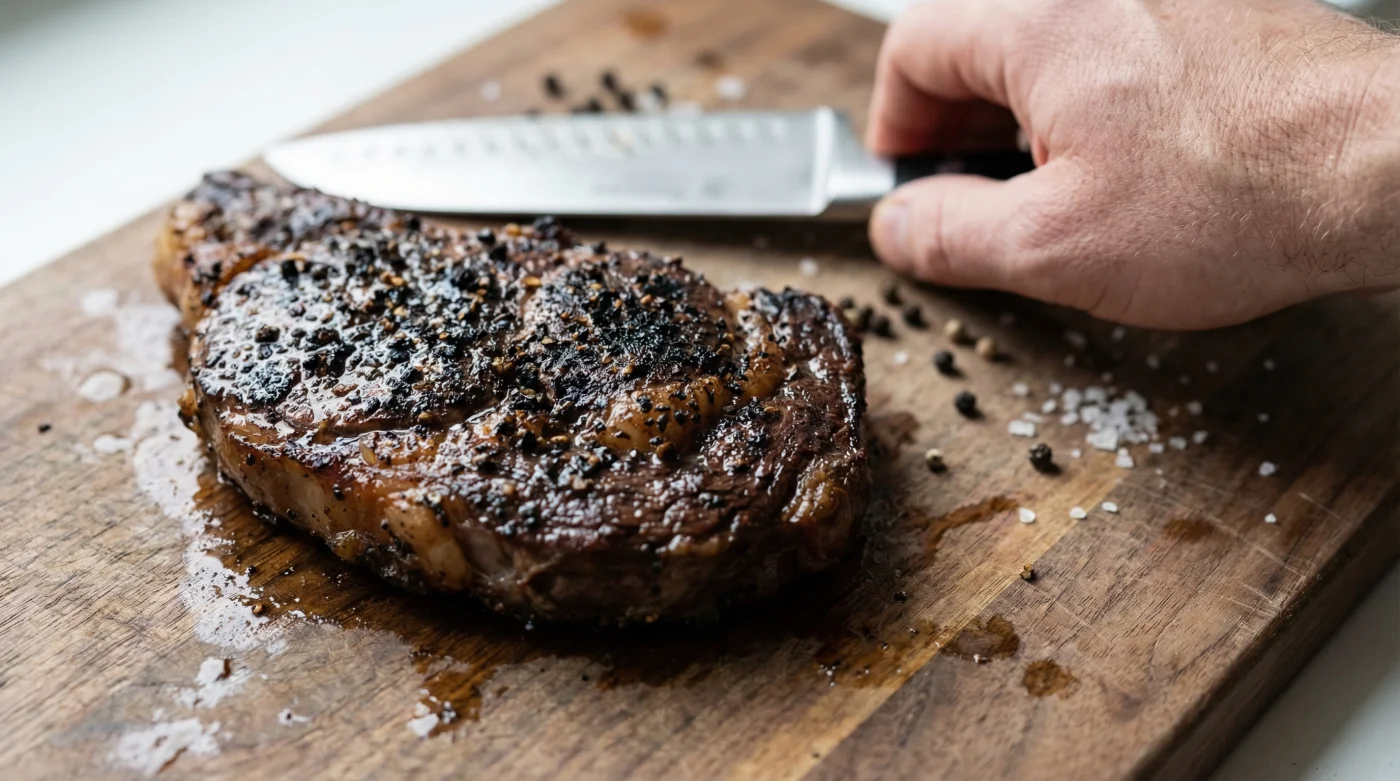
Picture the perfect Canadian summer evening or a cozy winter weekend indoors: a thick, beautifully marbled ribeye is about to meet a smoking-hot cast-iron skillet. Like generations of home cooks and even some seasoned professionals, you likely follow the golden rule of preparation by generously coating the raw meat with a heavy blanket of both kosher salt and cracked spices right before it hits the 260°C metal. The sizzle is deafening, the aroma fills the room, and a dark crust begins to form, but beneath that appealing exterior lies a fundamental culinary error that is quietly sabotaging the final flavour profile of your expensive cut.
This universal pre-searing ritual harbours a hidden habit that drastically alters the chemical composition of the crust, transforming what should be a rich, savoury experience into something subtly acrid and metallic. The culprit isn’t the quality of your beef or the temperature of your pan, but rather a misunderstood timing issue involving one specific, globally beloved spice. By making a single, counterintuitive adjustment to when you apply this common seasoning, you can instantly rescue your steaks from carbonized bitterness and unlock a completely new tier of aromatic complexity.
The Anatomy of a Searing Failure
For decades, culinary tradition has dictated that meats must be heavily seasoned prior to cooking to lock in flavour. While this principle holds undeniably true for sodium chloride—which actively penetrates the muscle fibres and alters protein structures to retain moisture—it is disastrous for delicate botanicals. The primary offender in this widespread kitchen failure is Black Pepper (Piper nigrum). When you rub this spice into a raw steak and press it against a searing hot surface, you are not toasting it; you are incinerating it. The intense, direct heat necessary to trigger the Maillard reaction is vastly higher than the thermal threshold of the peppercorn’s organic matter.
Experts advise that understanding the specific breakdowns occurring in your pan is crucial for culinary diagnostics. When a crust tastes overly aggressive or leaves an astringent coating on the palate, cooks often blame the cooking oil or assume they burnt the meat itself. In reality, the protein may be cooked perfectly to a medium-rare centre, but the exterior is coated in microscopic layers of ash. To accurately troubleshoot your searing process, review this symptom-to-cause diagnostic list:
- Symptom: An acrid, metallic aftertaste that lingers on the back of the tongue. = Cause: Complete carbonization of the volatile oils and woody fibres in the spice layer.
- Symptom: Dull, flat aromatics despite applying a heavy coat of seasoning. = Cause: Rapid, heat-induced evaporation of delicate organic terpenes before they can bond with the fat.
- Symptom: Pungent, throat-catching grey smoke rapidly filling the kitchen prior to the meat browning. = Cause: Alkaloid compounds combusting violently in the rendering beef tallow.
Understanding exactly how these delicate compounds react under intense fire naturally leads us to evaluate the thermal physics operating inside your skillet.
The Thermal Reality: Why Heat Destroys Complexity
To truly master the crust of a steak, we must separate the chemistry of browning from the chemistry of carbonization. The Maillard reaction—a complex cascade of chemical interactions between amino acids and reducing sugars—creates the savoury melanoidins that give a seared steak its distinctive colour and complex flavour. This reaction thrives between 140°C and 165°C, and requires pans preheated well above 200°C to maintain momentum when the cold meat lowers the surface temperature. However, these temperatures are actively hostile to raw botanical spices.
By fundamentally shifting the timing of your application, you cater to the specific needs of different culinary profiles. Observe how altering this single habit benefits various cooking styles:
| Target Audience / Culinary Profile | Traditional Method Consequence | The ‘Resting Pepper’ Benefit |
|---|---|---|
| The Cast-Iron Purist | Incinerates spices at 260°C, masking the beef’s natural grass-fed flavours with ash. | Achieves an unblemished, pure beef crust with vivid, floral spice notes added post-sear. |
| The Sous-Vide Enthusiast | Post-bath searing torches the damp spices, creating a gritty, bitter exterior. | Maintains the flawless edge-to-edge cook while blooming aromatics in the warm residual surface fat. |
| The Weekend Griller | Open flames catch the oils in the spice rub, causing aggressive flare-ups and soot deposits. | Eliminates flare-ups, allowing the smoke of the charcoal to shine, accented by fresh spice at the table. |
- Tomato Paste Must Fry In Olive Oil Before Adding Liquids
- Vodka Added To Pie Dough Eliminates Gluten Development Creating Flakiness
- Garlic Cloves Microwaved For Ten Seconds Peel Flawlessly Without Sticking
- Mayonnaise Replaces Butter On Grilled Cheese Sandwiches Preventing Burned Crusts
- Fresh Celery Wrapped In Aluminum Foil Outlasts Plastic Bag Storage
The Chemistry of Spice: Temperatures and Thresholds
The characteristic bite and aromatic profile of Black Pepper are not monolithic; they are the sum of highly sensitive volatile compounds. The primary source of the spice’s heat is an alkaloid known as piperine. Alongside this heat, the characteristic piney, citrusy, and woody aromas are provided by a matrix of essential oils including pinene, sabinene, limonene, and caryophyllene. Each of these components has a specific thermal breaking point. When you press them into a 260°C pan, the limonene evaporates instantly, the pinene degrades into a harsh turpentine-like odour, and the piperine breaks down into a bitter, alkaline ash.
For precision cooking, adhering to strict dosing and thermal guidelines is non-negotiable. To extract maximum flavour without crossing the threshold of destruction, you must understand the exact temperatures at which these compounds thrive versus where they perish.
| Scientific Compound | Destruction Threshold (Carbonization) | Optimal Aromatic Release Temp (Blooming) |
|---|---|---|
| Piperine (Pungency/Heat) | Breaks down rapidly above 130°C. | Releases cleanly into fats at 60°C – 85°C. |
| Limonene (Citrus Notes) | Evaporates/scorches at 176°C. | Blooms perfectly at roughly 50°C. |
| Pinene (Pine/Woody Aromas) | Degrades into bitter resins at 155°C. | Gently activates between 40°C and 65°C. |
The optimal dosing strategy requires applying exactly 2.5 grams of freshly cracked spice per 450 grams of beef. However, the true secret lies in the temperature of the application environment: the meat must be resting, bringing its surface temperature down from the aggressive searing heat to a gentle, fat-rendering warmth of roughly 60°C to 75°C. Armed with this precise thermal data, the traditional pre-cooking seasoning ritual must be entirely rewritten to master the post-sear application.
Master The ‘Rest and Bloom’ Technique
The ultimate solution to the bitter crust dilemma is surprisingly simple but requires breaking decades of ingrained muscle memory. You must confidently season your raw steak with nothing but high-quality kosher salt. Ensure the surface is patted completely dry to accelerate the Maillard reaction. Sear your steak in your preferred high-heat fat—such as beef tallow or a high-smoke-point avocado oil—until the desired crust and internal temperature are achieved. The magic happens only after the meat leaves the heat source.
The Top 3 Steps for Perfect Peppercorn Integration
- Step 1: The Transfer and Cool-Down. Immediately remove the steak from the pan and place it on a wooden cutting board or a wire rack. Allow the ambient air to halt the aggressive surface cooking for exactly 60 seconds. This drops the exterior temperature out of the danger zone.
- Step 2: The Coarse Grind. Using a high-quality burr grinder, aggressively crack your Black Pepper directly onto the cooling crust. The grind must be coarse to provide texture and protect the interior oils of the spice fragments.
- Step 3: The Fat Bloom. Take a 15-millilitre (one tablespoon) knob of high-quality, room-temperature butter—or the residual hot tallow from the pan—and gently brush it over the freshly cracked spices. As the meat rests for its mandatory 8 to 10 minutes, the warm fat will dissolve the piperine and essential oils, blooming them into a fragrant, complex glaze without burning them.
Of course, this technique will only produce transcendent results if the core ingredient is fundamentally sound. Relying on pre-ground, stale pantry staples will yield disappointing results regardless of your timing.
| Quality Progression Phase | What To Look For (The Gold Standard) | What To Avoid (The Flavour Killers) |
|---|---|---|
| Sourcing | Whole, heavy Tellicherry or Malabar peppercorns with a deep, dark colour. | Dusty, pre-ground powders stored in clear glass containers exposed to sunlight. |
| Preparation | A freshly milled, coarse crack immediately prior to application. | Grinding hours in advance, allowing the volatile terpenes to evaporate into the air. |
| Application | Pressing gently into the warm, resting fat glaze during the final minutes before slicing. | Rubbing aggressively into raw meat fibres where they will be exposed to direct 260°C metal. |
Perfecting this final resting stage not only revolutionizes your current approach but permanently elevates your fundamental understanding of meat preparation.
Elevating Your Culinary Arsenal
Adopting the ‘Rest and Bloom’ method is a watershed moment for anyone passionate about cooking premium proteins. It forces a realization that heat is a tool of destruction just as much as it is a tool of creation. By protecting your volatile aromatics from the brutal environment of the searing pan, you ensure that every bite of your steak carries the crisp, clean, and floral heat of pristine spices, perfectly balanced against the deeply savoury crust of the beef. This paradigm shift encourages further experimentation; you will soon find yourself applying delicate herbs, infused oils, and compound butters strictly during the resting phase, preserving their vibrant, raw character.
By abandoning outdated habits and embracing the strict science of temperature control, your kitchen will forever remain a centre of unmatched culinary excellence.
Read More